


$15.00
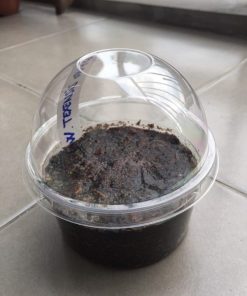
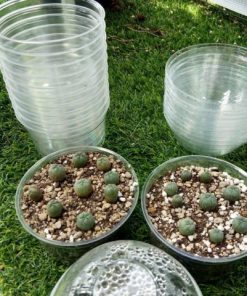
Germination kit 3 without seeds
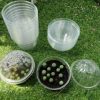
Germination Kit #3 (Without Seeds) is a convenient seed-starting option for growers who prefer to use their own seeds. Seeds are not included; check the product listing for exact contents.
Germination Kit 3 Without Seeds: Is It Worth Buying for Cacti?
You already have seeds. Paying for another packet may make little sense—but buying a kit with missing parts is no bargain, either. That is the appeal, and the risk, of Germination Kit 3 Without Seeds.
This guide will help you make a confident purchase. You’ll learn what the name does and does not promise, which seven details to verify, how to calculate the real cost, and what to inspect when the box arrives.
The checklist has a practical foundation. University of Minnesota Extension’s seed-starting guidance emphasizes suitable starting media and clean containers. Those are verifiable details—not claims a product photograph can prove.
A note on accuracy: We have not verified a particular seller’s current Kit #3 inventory, price, or performance. Components discussed below are items to check, not promised inclusions. This guide addresses lawful, non-controlled cacti; regulated species require separate legal consideration.
Germination Kit 3 Without Seeds: What Does the Name Actually Tell You?
The name gives you one clear expectation: seeds are excluded. It does not tell you whether the kit includes containers, a cover, starter medium, a light, or instructions.
The “3” may identify a seller’s bundle version. It is not a universal standard for kit size or quality. Two products with similar names can contain very different parts.
| Wording on the listing | What you can reasonably infer | What you still need to verify |
|---|---|---|
| “Without seeds” | No seed packet is included | Which other items are included |
| “Germination kit” | It is marketed for seed starting | Whether its parts suit your intended lawful species |
| “Kit 3” | It identifies a particular option | How that option differs from the seller’s other kits |
Ask for a SKU-specific packing list. A photograph may show seeds, plants, lamps, or decorative pots that are not in the box. The written list should name each included component and its quantity.
Who Should Buy a Seed Starter Kit Without Seeds?
A seed starter kit without seeds is most useful when you have lawfully obtained seeds and want a convenient set of compatible supplies. You can choose your own species rather than accept whatever packet comes in a preselected bundle.
It may be a good fit if you:
- Already own suitable seeds and do not want duplicates.
- Need a compact setup with parts that fit your available shelf or work area.
- Prefer one purchase over sourcing several individual components.
- Can confirm the contents against your own seed supplier’s guidance.
It may be the wrong purchase if you already own most of the hardware. In that case, a replacement tray or cover could cost less than another complete bundle.
It is also a poor choice when the seller cannot explain what is included. A low price cannot make up for an unusable or undocumented kit.
For hobbyists growing slow-growing, non-controlled cacti, durability matters. A container you can inspect and maintain over time may offer more value than a flashy bundle with accessories you will never use.
Seven Kit Details to Verify Before Checkout
You do not need an impressive-looking box. You need components that are identifiable, compatible, and in good condition.
Use these seven checks while reading the listing. If a detail is absent, ask the seller rather than treating a photograph as confirmation.
1. An itemized inventory
Look for quantities as well as item names. “Seed-starting supplies included” is not precise enough to tell you whether there is one container or several.
Check whether the inventory matches the exact without-seeds option selected at checkout. Sellers may use the same photographs for several bundle variations.
2. Container dimensions and construction
Compare the container’s usable inside dimensions with your available space. An external measurement alone may not tell you how much room the lid or rim takes up.
Ask about the material if you plan to reuse the kit. A rigid container that sits level and can be cleaned is easier to evaluate than a thin tray that bends when lifted.
3. Cover fit and access
If a cover is included, find out whether it fits the listed container and how it opens. A transparent cover can make inspection easier, but a cover shown in a photograph may be an optional extra.
Also ask whether access or ventilation is adjustable. Do not assume a sealed-looking cover is automatically better for every species or every stage.
4. Starter medium: included or not?
Some seed-free bundles include growing medium; others provide only hardware. Confirm whether medium is included, how much comes in the package, and how the seller describes it.
A bag labeled “cactus soil” is not, by itself, proof that it suits every cactus seed. Compare the product details with guidance for the lawful species you intend to grow.
For a deeper material comparison, place your cactus seed-starting media guide internal link here.
5. Drainage and water protection
Check whether containers have drainage openings and whether a separate catch tray is supplied. These are two different parts, even when product photos make them look like one unit.
Think about where the kit will sit. A shelf or desk needs protection from leaks, while the container itself should match the care guidance you plan to follow.
6. Lighting and electrical parts
If a lamp appears in the product image, confirm whether it is included in this SKU. Ask whether the power supply, mounting hardware, and instructions come with it.
If electrical equipment is included, check its stated specifications and applicable safety information. You may also want your site’s grow lights for cactus seedlings guide at this point in the article.
7. Instructions, labels, and replacement options
Instructions should identify the included parts and explain their intended use. They should not substitute vague promises such as “guaranteed success” for a clear component list.
Labels are useful for keeping lawful species and purchase records organized, but do not assume they are included. Check whether damaged parts can be replaced individually and how the seller handles missing items.
What Might Be Missing Even From a “Complete” Kit?
“Complete” is a marketing description, not a standardized contents list. Apart from seeds, you should verify every item you consider essential.
Common points of confusion include:
- Growing medium: Is it included, or must you purchase it separately?
- Cover: Is the pictured lid part of this option?
- Lighting: Is the lamp included, or is it staging for the photograph?
- Power supply: Does an included electrical item arrive ready to connect?
- Catch tray: Is there protection beneath containers with drainage?
- Labels and instructions: Are they supplied or merely suggested?
- Optional accessories: Are pictured mats or measuring tools sold separately?
Read the selected variant at checkout, not just the general product description. If the product page switches photos when you change options, recheck the itemized list as well.
Save a copy of the listing and your order confirmation. If something arrives missing, those records make the conversation with the seller more straightforward.
What Matters for Slow-Growing, Lawful Cacti?
Slow-growing cacti can make a weak purchase decision expensive in time. If a container cracks, a cover does not fit, or a replacement part is unavailable, you may be dealing with that limitation long after checkout.
Prioritize cleanability, stable construction, and easy inspection. Those features are more useful than a long list of accessories whose purpose the seller cannot explain.
Be cautious with universal claims. A general seed-starting guide may be written primarily for vegetables, while different cactus species can have different requirements. Use species-appropriate guidance for the non-controlled plants you intend to grow rather than assuming one kit label settles every question.
A kit also cannot compensate for poor seed quality or an unsuitable location. Its job is to give you workable equipment, not to guarantee a biological outcome.
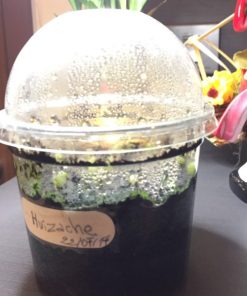
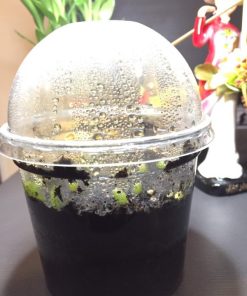
A little condensation on a clear cover is an observation, not proof of success. Likewise, a polished product photo says little about how sturdy the parts will feel in your hands.
Seed-Free Kit, Seeded Bundle, or DIY: Which Is the Better Buy?
The best option depends on what you already own. Compare equivalent usable parts, not bundle names.
| Option | Main advantage | Best fit | Main drawback to check |
|---|---|---|---|
| Seed-free kit such as Kit #3 | Lets you use seeds you already own | Buyer who wants a convenient bundle | Exact contents may be unclear |
| Seeded bundle | Includes a preselected seed packet | Buyer who wants that specific lawful species | Seeds may duplicate what you have |
| DIY set of separate parts | Greater control over each item | Buyer with existing supplies or unusual space limits | More compatibility checks and purchases |
If you already own containers and lighting, a DIY purchase of one missing item may be sensible. If you own only seeds, a well-documented seed-free kit could save shopping time.
Do not pay extra for a seeded bundle simply because its package looks more complete. First check whether its included seeds are appropriate, lawful for you to possess and grow, and genuinely useful to your plans.
The reverse is also true: a DIY basket is not automatically cheaper. Shipping from several sellers and mismatched parts can erase the apparent savings.
Calculate the Real Price, Not the Sticker Price
Use this simple comparison:
Usable delivered cost = kit price + shipping + missing essentials + required replacements.
Consider an illustration—not a claim about Kit #3 pricing. A $29 seed-free kit that needs $12 of additional medium and costs $8 to ship has a usable delivered cost of $49.
An alternative priced at $45, with equivalent needed parts and shipping included, may be the better value. If you already own suitable medium, the comparison changes again.
Check the return terms alongside the arithmetic. A lower-cost kit with unclear damage or missing-part support carries a different risk from one backed by a clear policy.
Finally, ask whether you can reuse the components. A sturdy tray that fits your space may justify a higher initial price than a disposable-looking bundle. That is a value judgment—not a promise that any particular kit will last a set number of seasons.
Four Questions to Send the Seller Before You Buy
A good product page may answer all four. If it does not, a short message can prevent a second order or an awkward return.
- “What is the complete packing list for Germination Kit 3 Without Seeds?”
Ask for quantities and explicit exclusions. Mention the exact variant or SKU in your message. - “What are the containers’ inside dimensions, and what cover and catch tray—if any—are included?”
This helps you check fit, storage space, and whether photographed parts belong to the bundle. - “Is starter medium or lighting included? If so, what are the exact product details?”
“Yes, supplies are included” is less useful than a named item, quantity, and specification. - “What is the total delivered price, and how are missing or damaged components handled?”
Check shipping, return windows, and whether you must contact the seller before using any parts.
Keep the answer with your receipt. A written response gives you a reliable reference if the listing later changes.
If the seller cannot clarify a basic inclusion, pause. You can compare another bundle or assemble your own set instead of buying on a guess.
Your Arrival-Day Inspection Checklist
Inspect the kit before using its contents. That keeps missing-part and damage questions separate from any later growing problems.
- Photograph the unopened package and its contents. One clear image of all parts laid out is easier to reference than several close-ups.
- Compare each item with the packing list. Count containers, covers, accessories, and any stated quantities of medium.
- Check physical condition. Look for cracks, warped edges, sharp damage, or a lid that does not align with its container.
- Confirm labels and specifications. If an electrical item was included, match its components and documentation to the listing.
- Record anything missing immediately. Contact the seller within the stated reporting window, with photos and your order number.
- Keep seed records separate. Save the lawful seed supplier’s identification and care information rather than assuming the kit instructions apply equally to every species.
This is also the right time to decide whether the kit fits your workspace. An empty tray is easier to measure and evaluate than one already in use.
How to Troubleshoot the Kit Without Guessing at the Seeds
When something looks wrong, separate an equipment question from a seed or species question. That distinction can save you from blaming the wrong part of the setup.
| What you notice | What it may tell you to inspect | Sensible next check |
|---|---|---|
| Cover does not sit evenly | Fit, warping, or a mismatched part | Compare it with the packing list and contact the seller |
| Water reaches the shelf | Drainage or missing catch tray | Check the product description and supplied components |
| Included lamp will not operate | Power supply, connection, or damaged hardware | Follow the manufacturer’s safety instructions and warranty process |
| Persistent odor or visible contamination | Cleanliness and equipment condition | Review manufacturer guidance and assess whether parts need replacing |
| Little or no emergence | Several possible factors, including seed quality | Avoid assuming the kit alone caused the outcome |
A cactus seedling troubleshooting guide can help readers explore broader symptoms. Keep that resource separate from your product-return process: a retailer can address a broken cover, but it cannot diagnose every seed-quality or species-specific issue from a photograph.
Read Reviews for Evidence, Not Excitement
The best review of a seed-free kit is not necessarily the one with the happiest headline. Look for details you can compare with the current listing.
Useful reviews identify the exact version purchased, show the components laid out, and describe fit and condition. Recent reviews can also reveal whether a seller has changed the bundle.
Treat a germination claim with care. A reviewer may have used different seeds, equipment, or conditions from yours. One person’s result cannot establish a reliable success rate for the kit.
Look for patterns instead:
- Do several buyers report the same missing component?
- Do photographs match the current packing list?
- Does the seller answer questions about variants clearly?
- Are damaged parts resolved promptly under the stated policy?
A review can provide valuable observations. It should not replace the seller’s written inventory, specifications, and return terms.
Check Seed Legality and Provenance Separately
A kit and a seed packet are separate purchasing decisions. The fact that a kit is sold without seeds does not establish that every species you could put in it is legal to possess, import, or grow.
For example, peyote (Lophophora williamsii) appears in U.S. Schedule I regulations under 21 CFR § 1308.11. Exceptions and rules depend on the jurisdiction and circumstances. This article does not provide instructions for sourcing or propagating that regulated species.
If seeds will cross a national border, consult USDA APHIS plant-import guidance and any applicable conservation or local requirements before ordering. A retailer’s willingness to ship is not a substitute for checking the rules.
For non-controlled cacti, retain accurate species identification and purchase records. Clear provenance helps you make better care decisions and avoids treating a mystery packet as if the kit’s general instructions could identify it.
Three Buying Scenarios That Clarify the Decision
Scenario 1: You own seeds but almost no equipment. A seed-free bundle may save time if its written inventory includes the parts on your checklist. Compare its delivered price with a DIY basket before choosing.
Scenario 2: You have limited shelf space. Dimensions become a deal-breaker. Confirm the container’s footprint, the height of any included cover, and the space needed for any separately purchased equipment.
Scenario 3: You already have reliable supplies. Avoid buying duplicates for the sake of a neat-looking bundle. Price the one or two replacements you need, and choose Kit #3 only if its remaining parts justify the cost.
These scenarios share one rule: buy against your actual inventory. Make a short list of what you own, what is serviceable, and what the seller has confirmed. The gap between those lists is what you need to purchase.
Use This Two-Minute Kit Scorecard
Give each category 0, 1, or 2 points. This is a buying aid, not a laboratory rating or a score for Kit #3 itself.
| Category | 0 points | 1 point | 2 points |
|---|---|---|---|
| Contents | Unclear | Partly listed | Fully itemized |
| Fit | Key dimensions missing | Some measurements available | Required dimensions confirmed |
| Construction | Material or condition unclear | Basic description | Materials and replacement details clear |
| Total cost | Extras unknown | Some extras priced | Delivered usable cost calculated |
| Seller support | Policy unclear | Basic policy available | Missing-part and return process clear |
A score of 8–10 suggests a well-documented candidate. At 5–7, ask the seller for the missing details. At 0–4, keep comparing rather than paying for uncertainty.
Do not use points to override a legal or essential compatibility concern. If the species is regulated for you, or the kit cannot accommodate a non-negotiable requirement, a high score elsewhere does not solve that problem.
The scorecard’s real purpose is to expose unanswered questions. Once you have answers, you can make a purchase based on evidence rather than packaging.
FAQ: Germination Kit 3 Without Seeds
What comes in Germination Kit 3 Without Seeds?
The name indicates that seeds are not included. It does not establish whether containers, a cover, medium, lighting, or labels come with the kit. Check the current seller’s itemized list for the exact variant before ordering.
How is a seed starter kit without seeds different from a seeded bundle?
A seed-free kit lets you use seeds you already own instead of paying for a preselected packet. The hardware may also differ between variants, so compare both packing lists rather than assuming seeds are the only change.
Why buy a seed-free cactus kit instead of assembling one yourself?
A seed-free kit can reduce shopping and compatibility work if its parts are clearly specified and fairly priced. DIY may be better when you already own supplies or need particular dimensions. Compare delivered costs for equivalent usable parts.
When should I order the kit if I already have seeds?
Order when you have checked your seeds’ legal status, reviewed reliable guidance for the intended non-controlled species, and allowed time to inspect the kit before use. Confirm the delivered contents before relying on them for your plans.
Can I use any cactus seeds with Germination Kit 3 Without Seeds?
No kit is automatically suitable for every cactus species. Requirements and legal restrictions vary. Check reliable species-specific guidance, the seller’s specifications, and the rules that apply where you live.
How can I tell whether the kit includes soil or a grow light?
Read the itemized contents for the exact without-seeds option. Do not rely on staged photographs or a general “complete kit” description. If either item is not explicitly listed, request written confirmation from the seller.
Can a seed-free germination kit guarantee cactus germination?
No. A kit supplies equipment; it cannot guarantee the viability of your seeds or control every condition affecting germination. Judge the product by its documented contents, condition, suitability, and seller support—not an unsupported success promise.
The Bottom Line: Buy Certainty, Not Just a Box
Germination Kit 3 Without Seeds can be a sensible purchase when you already own lawful seeds and want compatible supplies in one order. Its value depends on what is actually included, what you must buy separately, and whether the total delivered price beats your alternatives.
You do not need to guess. Get the packing list, check the seven details, calculate the usable cost, and inspect every part on arrival. That turns a vague kit name into a decision you can defend.
Be the first to review “Germination Kit #3 (Without seeds)”
Related products
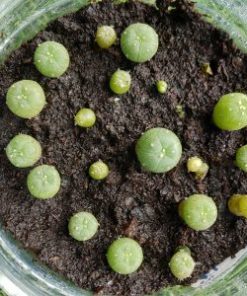
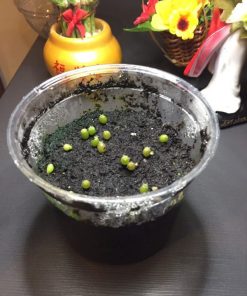
Germination Kit
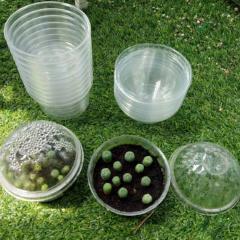
Cactus Accessories, Soil and Tools
Plastic container special cactus germination 3 3/4″ (9.5cm) diameter
Reviews
There are no reviews yet.