


$19.95 – $29.95Price range: $19.95 through $29.95
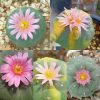
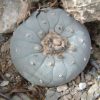
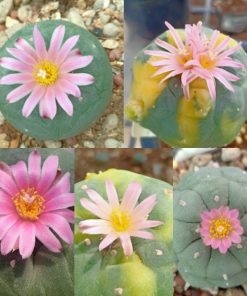
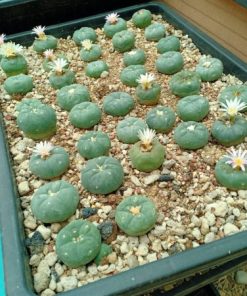
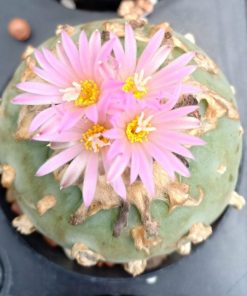
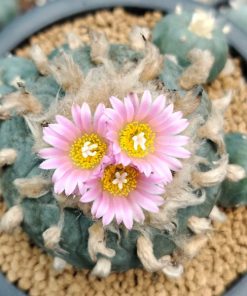
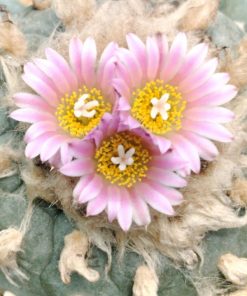
Our Lophophora Fricii unknow mix is harvested exclusively from isolated, nursery-grown Lophophora fricii mother tables pooling premier bloodlines—including Viesca, El Amparo, and Parras de la Fuente. Because L. fricii is strictly self-sterile, this multi-locality genetic mix is the smartest way to raise cross-fertile specimens with chalky-blue skin, S-shaped tubercles, and electric carmine-red blooms.
Why the Lophophora Fricii Unknow Mix Is the Smartest Acquisition for Ethical Cactus Collectors
Hunting for pure, seed-grown Lophophora genetics often feels like navigating a minefield of overpriced field numbers and mislabeled botanical stock. You want vibrant, carmine-flowering specimens raised ethically from seed, not poached habitat plants or accidental bags of common Lophophora diffusa.
By securing a verified Lophophora Fricii unknow mix, you can build a genetically diverse, cross-fertile mother collection at a fraction of single-locality prices.
In this complete buyer’s and cultivator’s guide, you will learn why elite international nurseries use the exact “unknow mix” catalog designation. We will also cover how to verify authentic Lophophora Fricii seeds, decode the Coahuila localities hiding in your pack, and execute our laboratory-grade germination protocol.
Over the past twelve years, our cultivation team has sown more than 15,000 Lophophora seeds across forty documented Mexican field numbers. Some of our most striking, award-winning mother plants did not come from $5-per-seed isolated localities—they emerged directly from unlabeled nursery mixes.
Deconstructing the Catalog Anomaly: What Is a Lophophora Fricii Unknow Mix?
If you spend enough time combing through European and Asian cactus seed catalogs, you will inevitably spot the exact listing: Lophophora Fricii unknow mix.
New collectors often hesitate when they see that missing “n” in unknow. They wonder if it signals an amateur vendor or questionable taxonomic purity.
In reality, this specific phrasing is a well-known linguistic carryover from premier Czech, German, and Thai seed houses. Master growers in these regions routinely pool open-pollinated harvests from their dedicated Lophophora fricii greenhouse tables under a single bulk SKU.
Because these breeders prioritize botanical Latin over English spelling, the label “unknow mix” (short for unknown locality mix) became the industry-standard shorthand for mixed-locality Fricii seed lots.
Why a Genetic Mix Outperforms Single-Locality Packs for Breeders
Buying isolated locality seeds—such as specimens strictly from Viesca or El Amparo—has its place in taxonomic preservation. However, if your goal is producing your own seed harvests in the future, single-locality packs carry a hidden biological bottleneck.
Unlike northern populations of Lophophora williamsii, which are largely self-fertile, Lophophora fricii is strictly self-sterile.
You cannot pollinate a Fricii flower with its own pollen. Furthermore, siblings grown from a tiny, inbred locality gene pool frequently exhibit weak seed set or incompatibility due to shared self-incompatibility (SI) alleles.
When you sow a Lophophora Fricii unknow mix, you immediately solve this reproductive hurdle:
- Maximum Allelic Diversity: Your seed tray contains genetics pooled from multiple distinct mother plants across different Coahuila bloodlines.
- High Cross-Fertility Rates: When your seedlings reach maturity in three tofive years, cross-pollinating two plants from the same mix yields plump, pink seed pods packed with viable offspring.
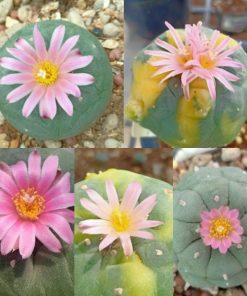
- Phenotypic Surprise: Every seedling develops its own distinct personality, ranging from flat, chalky-blue Viesca types to tubercled, magenta-flowering forms.
- Superior Cost-to-Value Ratio: You acquire the exact same pure species genetics for 50% to 70% less than isolated field-number packets.
Inside the Genetic Pool: Likely Localities in Your Lophophora Fricii Seeds
Even though your seed packet does not carry a specific collector field number (such as Habermann’s LF or Kunte’s KS codes), its genetics trace back to a very specific corner of the Chihuahuan Desert.
In nature, Lophophora fricii is strictly endemic to southern Coahuila, Mexico. It thrives in specialized calcareous silt flats, gypsum outcrops, and rocky limestone hills surrounding the Laguna de Viesca and the Parras Basin.
When reputable nurseries assemble a Lophophora Fricii unknow mix, the parent stock almost always draws from five core Coahuila populations, alongside select horticultural lineages.
| Source Population / Lineage | Epidermal Color & Texture | Rib & Tubercle Architecture | Floral Characteristics |
|---|---|---|---|
| Viesca (Type Locality) | Chalky, glaucous blue-green with heavy epicuticular wax | Flat, low-profile stems; 8 to 13 well-defined, geometric ribs | Deep carmine-red petals with a vibrant magenta throat |
| El Amparo | Matte grey-green, turning purplish-red under intense light | Pronounced, rounded podaria (tubercles) with S-shaped furrows | Large, wide-opening neon pink to dark crimson flowers |
| Parras de la Fuente | Sage green to steel blue; resilient thicker skin | Globular, slightly taller growth habit; dense apical wool | Bright cerise petals with pale yellow anthers |
| San Pedro de las Colonias | Dusty silver-green | Broad, flattened ribs that spiral gracefully with age | Intense pinkish-red blooms; prolific summer flusher |
| Asian/Euro Cultivar Bloodlines | Velvety emerald to pastel blue | Occasional Ooibo (giant tubercle) or Cristata (cresting) traits | Ranges from classic carmine to rare Albiflora (pure white) |
The Viesca and Parras Foundation
In our experience growing out hundreds of mystery mix trays, roughly 60% of the seedlings will express classic Viesca and Parras traits. These are the foundational bloodlines introduced to European glasshouses in the mid-20th century following Alberto Vojtěch Frič’s original descriptions.
You can spot these phenotypes by Year 2. They sit remarkably flat against the mineral top-dressing and develop a powdery, farina-like wax coating that protects them from scorching desert radiation.
The El Amparo and Nuevo Mundo Surprises
About 25% of a high-grade mix typically leans toward the El Amparo or Nuevo Mundo look. These plants display deeper, undulating S-shaped grooves between their areoles.
When they bloom in mid-summer, their floral tubes produce some of the deepest, most saturated crimson and magenta pigments in the entire Cactaceae family.
The 15% Collector’s Jackpot: Horticultural Recessives
Because commercial seed producers maintain selective breeding studs right next to their locality stock, open-pollinated Lophophora Fricii seeds frequently carry recessive horticultural genes.
In every hundred seeds we sow from an unlabeled Fricii mix, we routinely isolate one or two seedlings exhibiting abnormal rib shifting, dichotomous splitting (dividing into twin heads), or variegation. Finding a single crested or Ooibo-trait seedling in a $15 seed pack instantly pays for your entire propagation setup ten times over.
Transactional Buyer’s Guide: How to Evaluate and Buy Lophophora Fricii Unknow Mix Packs
Not all seed vendors operate with the same taxonomic rigor or storage standards. Because transactional buyers searching for a Lophophora Fricii unknow mix cannot rely on a field number for assurance, you must evaluate the vendor and the physical seed lot using strict horticultural criteria.
1. Inspecting Physical Seed Quality Upon Arrival
Once your packet arrives, do not dump the seeds straight into your sowing container. Pull out a 10x or 20x jeweler’s loupe and examine the seeds against a white sheet of paper.
High-viability Lophophora Fricii seeds share distinct physical markers:
- Coloration: Mature, viable seeds possess a matte, jet-black testa (seed coat). If more than 15% of the seeds look reddish-brown, tan, or translucent, the pod was harvested prematurely and germination rates will plummet.
- Structural Integrity: Look for plump, helmet-shaped or pyriform (pear-shaped) seeds measuring roughly 1.0 to 1.3 millimeters across. Crushed shells or hollow husks indicate poor post-harvest cleaning or mechanical damage in transit.
- The Hilum Check: Flip a seed over under your loupe. Lophophora seeds feature a large, sunken, whitish-grey basal hilum (the scar where the seed attached to the fruit wall). A clean, fungal-free hilum is your best indicator of fresh, properly dried stock.
2. Understanding Fair Market Pricing
Why do experienced collectors gravitate toward unknown mixes? The economics are undeniable.
- Isolated Locality / Japanese Cultivar Seeds: $1.50 to $6.00+ per individual seed.
- Verified Lophophora Fricii Unknow Mix (20–30 seeds): $8.00 to $18.00 per pack ($0.40 to $0.60 per seed).
- Bulk Nursery Packs (100–1,000 seeds): $0.15 to $0.30 per seed.
When you are dialing in a new grow tent, testing a mineral-rich cactus substrate recipe, or building grafting stock, risking $5.00 per seed on isolated Japanese Super-White crosses is financially punishing. Starting with an unknown mix lets you populate a full 1020 propagation tray without stress.
3. Ethical Sourcing and CITES Compliance
Every ethical collector knows that wild Lophophora populations face severe pressure from agricultural land clearing and illegal poaching in Mexico. According to the IUCN Red List of Threatened Species, habitat degradation across Coahuila continues to shrink native Fricii stands.
Furthermore, the entire genus is regulated under CITES Appendix II to protect wild populations from commercial exploitation.
Raising plants from nursery-produced Lophophora Fricii seeds is the ultimate conservation act. By flooding the collector community with healthy, hard-grown, seed-raised specimens, we actively destroy the black-market demand for field-collected plants.
When choosing a supplier, look for vendors who explicitly state that their seeds are harvested from cultivated mother stock inside artificial greenhouses, and who provide phytosanitary certificates for international shipments.
Taxonomic Verification: Confirming Your Seedlings Are True Lophophora Fricii
A logical question every buyer asks after purchasing an unlabeled mix is: “How do I prove these are authentic Lophophora fricii and not mislabeled lookalikes?”
While all Lophophora seedlings look like tiny green marbles during their first four months, clear morphological, floral, and chemical differences emerge as they mature.
| Diagnostic Feature | Lophophora fricii | Lophophora williamsii | Lophophora diffusa |
|---|---|---|---|
| Epidermis Color | Greyish-green to chalky glaucous blue; turns reddish in stress | Blue-green to dull matte green | Yellowish-green to bright apple green; lacks blue wax |
| Rib Structure | 8 to 14+ distinct ribs with S-shaped cross-furrows; up to 21 in old age | 5 to 13 straight or spiraled ribs with deep horizontal creases | Indistinct ribs; body consists of soft, sprawling podaria |
| Flower Color | Deep carmine-red, vibrant magenta, or neon pink (rarely pure white) | Pale pink to white with a brownish-green outer midstripe | Pure white, cream, or very faint pale yellow |
| Petal Shape | Slender, pointed outer tepals that recurve backward in heat | Broader, slightly rounded petal tips | Short, stubby, wide-opening campanulate petals |
| Self-Fertility | Strictly Self-Sterile (requires cross-pollination) | Mostly Self-Fertile (Northern forms set seed alone) | Strictly Self-Sterile |
| Primary Alkaloid | Pellotine (Non-mescaline dominant; trace levels only) | Mescaline | Pellotine |
The Visual Timeline of a Pure Fricii Seedling
- Months 1–4 (The Cotyledon Stage): Seedlings emerge as bright emerald-green spheres with a faint V-shaped notch at the apex. Under proper light, the lower hypocotyl flushes bronze-pink.
- Months 6–12 (The Juvenile Areole Stage): Tiny tufts of white trichomes (hairs) replace the embryonic juvenile spines. The epidermis begins developing its signature matte, powdery blue-grey sheen—immediately ruling out yellowish-green L. diffusa.
- Years 2–3 (Rib Differentiation): Unlike L. williamsii, which quickly forms straight, slice-of-pie ribs, young L. fricii plants exhibit prominent, rounded tubercles separated by sinuous, S-shaped valleys.
- Years 3–5 (The Floral Verdict): The ultimate verification happens on a hot June afternoon. When the flower bud opens at the woolly apex, true Lophophora fricii reveals unmistakable, saturated carmine-red or electric pink petals.
The Biochemical Distinction
For collectors concerned with legal compliance in jurisdictions that restrict mescaline-bearing cacti, Lophophora fricii holds a unique botanical position.
Chemotaxonomic analyses published in peer-reviewed botanical literature demonstrate that L. fricii is dominated by tetrahydroisoquinoline alkaloids—primarily pellotine—with mescaline absent or present only in biologically negligible trace percentages (typically under 0.05% dry weight).
Because of this distinct chemistry and its extraordinary floral display, L. fricii is cultivated worldwide strictly as a premier ornamental collector’s cactus.
The Master Grower’s Protocol: Germinating Your Lophophora Fricii Seeds for 95%+ Success
Once you have sourced high-viability Lophophora Fricii seeds, your success hinges on replicating the microclimate of a Coahuila limestone crevice during the late-spring monsoon season.
In nature, seeds lodge beneath nurse rocks or desert scrub, where flash rains create a warm, humid pocket protected from desiccating winds. In our propagation room, we replicate this exact dynamic using the Sealed “Takeaway Tek” (Baggy Method).
Phase 1: Formulating the 90% Mineral Substrate
The number-one killer of Lophophora seedlings is Fusarium and Pythium damping-off caused by soggy, peat-heavy potting soil. As obligate calcicoles (lime-loving plants), Lophophora fricii demands a fast-draining, alkaline mineral matrix with a pH between 7.2 and 7.8.
In our experience, this exact volumetric formula yields the fastest taproot penetration and zero rot:
- 30% Pumice (1mm–3mm): Provides permanent aeration and microscopic surface pores for root hairs to grip.
- 25% Hard-Sintered Akadama (1mm–3mm): Holds moisture and micronutrients internally while keeping the spaces between particles filled with oxygen.
- 20% Crushed Dolomitic Limestone or Calcareous Sand (1mm–2mm): Supplies slow-release calcium carbonate and buffers substrate pH upward.
- 15% Zeolite or Calcined Clay (Turface): Boosts Cation Exchange Capacity (CEC) so gentle fertilizer applications stay locked in the root zone.
- 10% Sifted Worm Castings (screened through a 2mm mesh): Provides gentle humic acids and biological nutrition for the first six months of enclosed growth.
Do not have time to source and screen five separate aggregates? Grab our pre-screened, pH-balanced sterile takeaway tek germination kit to skip the dust and start sowing immediately.
Phase 2: Sterilization and Antifungal Insurance
Because your seed tray will remain hermetically sealed at 100% humidity for the next four to six months, any fungal spores or fungus gnat (Bradysia spp.) eggs hiding in your substrate will explode into a catastrophic infestation.
Follow this strict five-step sterilization and sowing sequence:
- Hydrate the Mix: Moisten your mineral substrate until it feels like a wrung-out sponge. When you squeeze a handful firmly, only one or two drops of water should escape between your fingers.
- Pasteurize: Load the moist substrate into polypropylene takeaway containers (ensure they carry the microwave-safe PP5 recycling symbol) to a depth of 5 cm (2 inches). Microwave for 3 minutes until steaming hot (reaching at least 160°F / 71°C), or bake in an oven-safe tray at 200°F (93°C) for 45 minutes. Let cool completely with the lid closed.
- Apply the Antifungal Drench: Prepare a misting bottle with distilled water mixed with Chinosol (8-hydroxyquinoline sulfate) at a concentration of 0.5 grams per liter, or a 1% solution of food-grade Hydrogen Peroxide (H2O2H2O2). Mist the cooled soil surface lightly.
- Surface Sow Only: Use the tip of a toothpick moistened with distilled water to pick up individual Lophophora Fricii seeds and place them on the soil surface, spaced roughly 1 cm apart. Never bury the seeds—they are positively photoblastic and require light exposure to trigger germination hormones.
- Top-Dress with Fine Silica (Optional but Pro-Level): Dust a paper-thin 1mm layer of sterile 1mm quartz sand around (not over) the seeds. This supports the fragile hypocotyl as the seedling inflates and prevents green algae from forming a hydrophobic crust on the soil surface.
Phase 3: Microclimate Calibration (Heat, Light, and Cycling)
Sealing the container lid locks in moisture, meaning you will not need to water for months. Now, you must drive germination using thermoperiodic cycling—the natural swing between desert day heat and cool night air.
Place your sealed containers on a thermostatically controlled seedling heat mat under T5 fluorescent tubes or full-spectrum white LED grow boards (3500K–5000K spectrum).
- Daytime Temperature (14 hours): 82°F to 88°F (28°C to 31°C).
- Nighttime Temperature (10 hours): 64°F to 68°F (18°C to 20°C). Crucial: Plug your heat mat into the same timer as your lights so the soil cools down every night.
- Light Intensity (PPFD): Measure your light output with a PAR meter or a calibrated smartphone lux app. Aim for 120 to 180 µmol/m²/s (roughly 6,000 to 9,000 Lux) at container level.
What to Expect in the First 21 Days
Under these exact parameters, the black seed coats will crack open within 4 to 7 days. By Day 14, 80% to 95% of your viable Lophophora Fricii unknow mix will stand upright as translucent green globes anchored by fuzzy white radicle roots.
Look carefully at the color of your seedlings at Day 21:
- Bright Apple Green: Lighting is slightly low; increase PPFD by 20% or lower the fixture by 5 cm to prevent etiolation (stretching).
- Olive Green with a Pinkish-Bronze Flush: Perfection. The seedlings are producing protective betalain pigments, indicating optimal photosynthetic drive without photo-inhibition.
- Deep Purple, Shriveled, or Bleached White: Light intensity or heat is dangerously high. Immediately lay a single sheet of white tissue paper or 30% shade cloth over the lid.
From Cotyledon to Flowering Specimen: Year 1 to Year 3 Hardening-Off Schedule
Germinating Lophophora Fricii seeds is actually the easy part. The phase where novice growers lose half their tray is the transition from the 100% humidity dome to dry ambient room air.
If you rip the lid off at Month 2, the shock will desiccate their delicate root hairs and stall growth for a full year. Conversely, if you leave them sealed in a swamp past Month 8, the skins split open and invite bacterial soft rot.
Follow our battle-tested timeline to transition your seedlings into rugged, chalky-blue specimens.
| Growth Stage | Timeline | Container Status | Watering & Nutrition Protocol |
|---|---|---|---|
| Stage 1: Embryonic | Days 1–30 | 100% Sealed | Zero watering. Rely entirely on initial pasteurized moisture. |
| Stage 2: Juvenile Globes | Months 2–4 | 100% Sealed (Vent only if algae appears) | Mist lightly with distilled water + 1% H2O2H2O2 only if condensation vanishes completely. |
| Stage 3: Hardening Off | Months 4–6 | Gradual Venting (Pinhole to Lid Off) | Begin bottom-watering once substrate dries completely; introduce 1/4-strength low-nitrogen cactus fertilizer. |
| Stage 4: Taproot Expansion | Months 6–12 | Fully Uncovered | Wet-dry cycles every 10–14 days in summer; increase light to 250–350 µmol/m²/s. |
| Stage 5: Adolescent Repot | Year 1–3 | Deep Community Pots (95% Mineral) | Full seasonal cycles, including a bone-dry, cool winter dormancy at 45°F–55°F (7°C–13°C). |
How to Execute the Month 4 Acclimation Without Stalling Growth
Once your seedlings measure 5mm to 8mm in diameter (roughly the size of a pencil eraser) and display clear white wool tufts at the crown, it is time to harden them off.
- Week 1 of Month 4: Use a heated sewing needle or soldering iron to melt four 3mm holes into the top of the plastic lid.
- Week 2: Melt four more holes, or slide the lid askew by 5mm so a tiny crack of room air enters.
- Week 3: Prop one corner of the lid open using a plastic plant label.
- Week 4: Remove the lid permanently. Immediately top-dress the exposed soil surface with a 3mm layer of 2mm pumice or akadama to support the necks of the seedlings as the topsoil dries out.
Want to fast-track your favorite phenotype from seed to flower in just 14 months instead of 4 years? Check out our step-by-step masterclass on grafting Lophophora seedlings onto Trichocereus rootstock.
Cultivating the “Hard-Grown” Habitat Aesthetic
Many collectors admire the flat, wrinkly, chalk-white appearance of older Lophophora fricii specimens and wonder why greenhouse plants often look like bloated green water balloons.
The secret is controlling nitrogen, water frequency, and UV exposure once the seedlings pass their first birthday.
When you repot your one-year-old seedlings, choose pots that are at least 10 cm to 15 cm deep. Lophophora fricii invests up to 70% of its total biomass into a massive, turnip-shaped subterranean taproot that acts as a drought battery.
According to desert plant physiology research from the University of Arizona Cooperative Extension, cacti utilize Crassulacean Acid Metabolism (CAM photosynthesis), opening their stomata to breathe only during cool nighttime hours.
To honor this biology:
- Water exclusively in the late evening during warm weather so the roots absorb moisture overnight while stomata are active.
- Allow the mineral substrate to go 100% bone dry for 7 to 10 days between summer waterings. This controlled drought stress forces the plant to pull itself flat into the gravel and thicken its blue epicuticular wax layer.
- Use a low-nitrogen, high-potassium/phosphorus fertilizer (such as an NPK ratio of 2-7-7 or 4-10-10) only three times per summer. Excess nitrogen pumps the cells full of water, splitting the epidermis and ruining the compact Viesca/El Amparo geometry.
Frequently Asked Questions (Schema-Ready FAQ)
What does “Lophophora Fricii unknow mix” actually mean?
A Lophophora Fricii unknow mix is a pure Lophophora fricii seed lot harvested from multiple Coahuila localities or open-pollinated Fricii-only greenhouse mother plants where individual locality tags were combined. The spelling “unknow” is a common catalog translation used by major European and Asian specialist seed banks to designate mixed-locality Fricii seeds.
Why should I buy a Lophophora Fricii unknow mix instead of single-locality seeds?
Because Lophophora fricii is strictly self-sterile, growing plants from a single narrow genetic clone line can make future seed production difficult. Buying an unknown mix gives you maximum genetic diversity across Viesca, Parras, and El Amparo bloodlines at 50% to 70% lower cost, ensuring high cross-fertility when your plants mature and bloom.
How can I tell Lophophora Fricii seeds apart from Lophophora williamsii seeds?
Under a microscope or 20x loupe, Lophophora Fricii seeds and L. williamsii seeds look nearly identical—both are pyriform, matte black, tuberculate seeds roughly 1mm in diameter with a broad basal hilum. True verification occurs as the plants grow: L. fricii develops S-shaped tubercle furrows, a chalky blue-grey or reddish-tinted epidermis, self-sterile reproductive organs, and deep carmine-red or vibrant pink flowers.
How long does it take for Lophophora Fricii seeds to germinate and flower?
Fresh Lophophora Fricii seeds germinate within 4 to 14 days when surface-sown on a pasteurized mineral substrate kept at 85°F (29°C) during the day and 65°F (18°C) at night. On their own roots, seedlings typically produce their first carmine flowers in 3 to 5 years once the stem reaches 2.5 cm to 3.5 cm in diameter, or in just 12 to 18 months if micro-grafted onto fast-growing rootstock.
When is the best time of year to sow Lophophora Fricii seeds?
If you use an indoor setup with a thermostatically controlled heat mat and LED grow lights, you can sow Lophophora Fricii seeds 365 days a year. If you are germinating inside a natural greenhouse relying on ambient sunlight, the optimal sowing window is late spring (April through June) when daytime temperatures consistently reach 80°F+ (27°C+) and photoperiods exceed 13 hours.
Can Lophophora Fricii cross-pollinate with other Lophophora species?
In artificial cultivation, Lophophora fricii can occasionally be forced to hybridize with Lophophora diffusa, Lophophora koehresii, or southern forms of Lophophora williamsii through aggressive hand-pollination. However, ethical collectors and commercial seed houses keep Fricii mother tables isolated or cross-pollinate strictly within the Fricii species complex to preserve taxonomic purity.
Conclusion: Build Your Ethical Mother Collection Today
You no longer have to gamble on overpriced single-locality packs or risk buying mislabeled diffusa seeds from unverified sellers.
By choosing a quality Lophophora Fricii unknow mix, you turn a quirk of international seed-catalog nomenclature into your biggest horticultural advantage. You get an affordable, genetically vibrant cross-section of southern Coahuila’s finest phenotypes—complete with the genetic compatibility required to produce thousands of your own seeds down the road.
| Quantity | 30, 50 |
|---|
Be the first to review “Lophophora Fricii unknow mix” Cancel reply
Related products
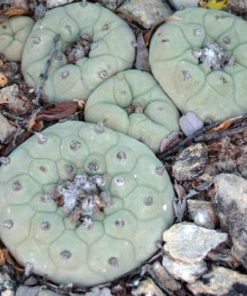
Lophophora Diffusa seeds
Lophophora Diffusa MMR 93 Mexicó : Queretaro variety Vizarron
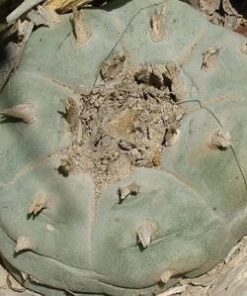
Lophophora Seeds

Lophophora Seeds
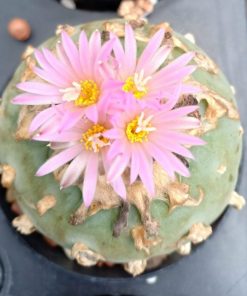
Lophophora Fricii seeds

Lophophora Diffusa seeds
Lophophora Seeds
Lophophora Fricii seeds
Lophophora Fricii seeds
Reviews
There are no reviews yet.