

$65.00
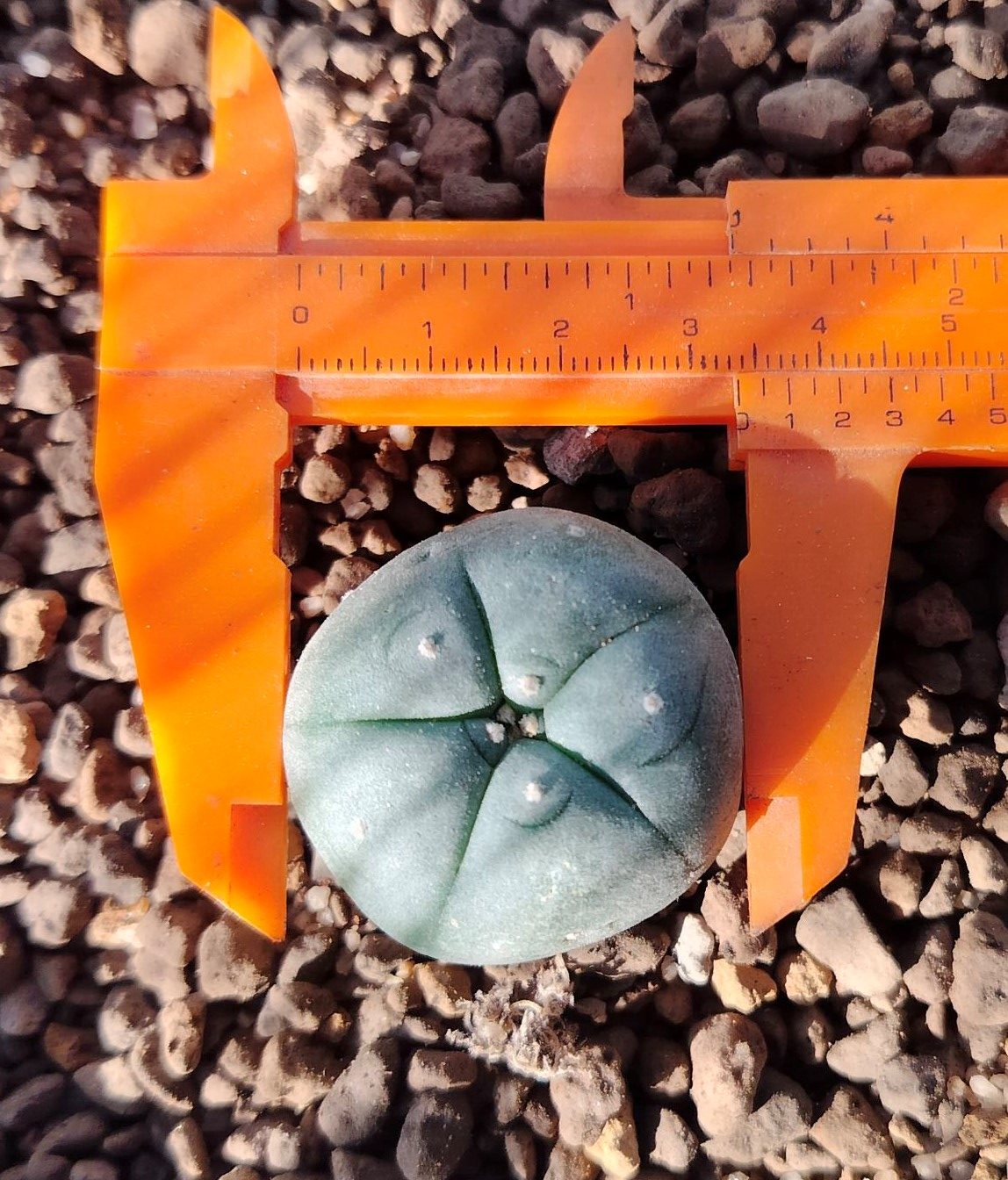
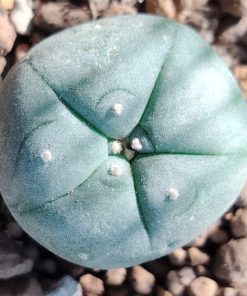
Lophophora williamsii var. texensis 2.5 cm
A 2.5 cm Lophophora williamsii var. texensis is a compact, grey-green Texas-form cactus prized by specialist collectors for its pruinose body, flat ribs, and slow-growing character. This guide covers identification, care, provenance, and the legal and conservation issues every buyer should understand.
Is Lophophora williamsii var. texensis 2.5 cm the Right Rare Cactus for a Serious Collector?
If you want a genuinely distinctive Texas-form Lophophora, a 2.5 cm Lophophora williamsii var. texensis* is an appealing size: large enough to show its mature character, but still compact enough for careful container cultivation. In our experience, buyers at this stage should focus on three things: verified provenance, realistic morphology, and a care plan built around its slow-growing taproot.
What Is Lophophora williamsii var. texensis?
Lophophora williamsii is the botanical species commonly called peyote. The cultivated designation var. texensis*—also seen as texana in some references—refers to a Texas-region phenotype rather than a universally settled botanical variety.
In cultivation, growers use the name to describe plants associated with:
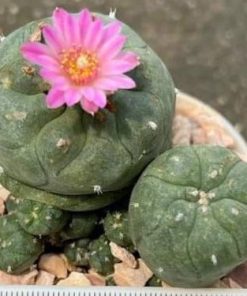
Greyer, pruinose epidermis—a pale, waxy bloom that reduces water loss and intense light exposure.
Flatter, more numerous ribs in well-established specimens; one reference describes up to 14 ribs in adult plants.
Compact, low-growing bodies rather than tall, elongated growth.
Texas/Big Bend-region associations in collector terminology, though geographic labels should be treated as horticultural provenance claims unless independently documented.
Why the “Texas County Variety Big Bend” Label Needs Scrutiny
Search results often combine terms such as “Texas County variety,” “Big Bend cactus,” and “2.5–3 cm diameters.” These are useful commercial descriptors, but they are not proof of wild origin, exact collection locality, or genetic purity.
A credible seller or grower should be able to state:
Whether the plant was seed-grown from cultivated parent plants.
The generation or lineage, if known.
Whether the plant was propagated legally in the seller’s jurisdiction.
Whether any CITES documentation applies to international movement. CITES Appendix II regulates international trade rather than banning it outright.
What a Healthy 2.5 cm Plant Should Look Like
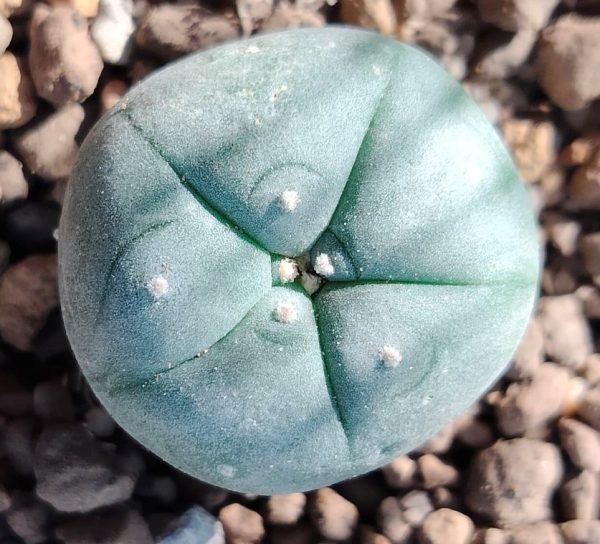
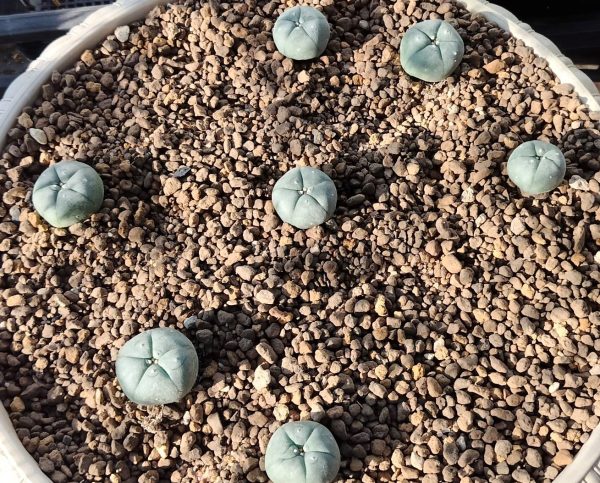
At 2.5 cm diameter, a Lophophora williamsii var. texensis is still juvenile, but it should already display the traits that make the form desirable.
Visual Checklist
Look for:
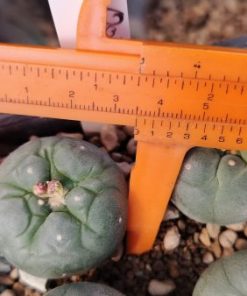
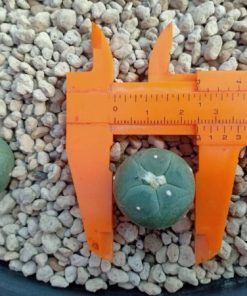
Diameter around 2.5 cm, measured across the widest point of the body, excluding root collar and wool.
Firm, evenly rounded body with no soft or sunken zones.
Grey-green to blue-grey coloration, often with a visible pruinose bloom.
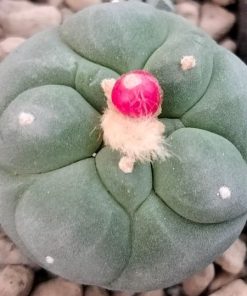
Short, woolly areoles rather than long spines; Lophophora is characteristically spineless or nearly spineless.
A healthy taproot—firm, pale to tan, and free of blackened or mushy tissue.
No corky scarring around the growing point, which can indicate repeated stress, rot, or poor handling.
What Is Normal and What Is Not
| Feature | Normal at 2.5 cm | Warning Sign |
|---|---|---|
| Body firmness | Firm, slightly yielding only after prolonged drought | Soft, translucent, or collapsing tissue |
| Color | Grey-green, blue-grey, or pruinose | Bright yellow, black, or widespread brown patches |
| Wool | Dense wool at the crown and areoles | Wet, matted, moldy, or foul-smelling wool |
| Root | Dry, firm taproot | Soft, dark, rotten, or severed taproot |
| Growth | Very slow; weeks may pass without visible change | Rapid stretching, pale growth, or sudden shriveling |
Why 2.5 cm Is a Meaningful Size
The 2.5–3 cm range is popular because it balances establishment risk and collector value.
Large enough to assess form: You can see rib structure, bloom, and body shape more clearly than in a tiny seedling.
Small enough to remain manageable: It fits a shallow mineral pot and adapts more easily to controlled conditions.
Better for observation: At this size, you can begin tracking annual growth, flowering behavior, and response to seasonal care.
Lower visual risk than tiny seedlings: A 2.5 cm plant has more reserves than a freshly germinated seedling, though it is still vulnerable to overwatering.
Legal and Ethical Status: Read This First
Internationally, Lophophora williamsii appears on CITES Appendix II, meaning cross-border trade requires appropriate documentation and compliance with applicable national laws. The species is also assessed as Vulnerable by the IUCN, with over-collection and habitat pressure among documented conservation concerns.
Compliance Checklist for Publishers and Growers
Confirm the law in the reader’s country, state, province, and municipality before publishing any transactional claim.
Do not imply that a plant is legal merely because it is sold online.
Clearly distinguish horticultural information from consumption information.
Favor documented cultivated propagation over ambiguous wild-collection narratives.
For international movement, treat CITES paperwork, phytosanitary requirements, and customs rules as non-optional.
How to Acclimatize a 2.5 cm Lophophora
A newly received Lophophora should never be rushed into full sun, frequent watering, or repotting.
Inspect Before You Pot
Check the body, crown wool, and root zone. Reject or quarantine any plant with soft tissue, black basal rot, insect activity, or an unpleasant smell.
Let It Settle Dry
Keep the plant unpotted or in its existing dry substrate in bright, indirect light for several days. This lets any transport stress become visible before you commit it to a new container.
Use a Shallow Mineral Mix
Use a fast-draining, predominantly mineral substrate. A practical base is:
50–70% pumice, scoria, or coarse perlite
20–30% coarse sand or fine gravel
10–20% low-peat cactus compost, if needed for slight moisture retention
Avoid dense peat-heavy soil. It stays wet too long around the taproot and encourages rot.
Choose the Right Pot
Select a shallow pot with drainage holes, only slightly wider than the plant. Deep containers hold unnecessary moisture around the root zone.
Wait Before the First Water
After repotting, wait roughly 5–10 days before watering, depending on root disturbance and ambient humidity. Then water lightly only if the plant is in active growth and the substrate is fully dry.
Light, Temperature, Water, and Seasonal Care
Light
Provide bright filtered light. Young or recently transplanted plants can scorch under harsh midday sun, especially behind glass. In our experience, morning sun with shade cloth or bright indirect afternoon light produces steadier color and compact growth.
Temperature
Keep conditions warm and stable during the growing season. A practical target is roughly 21–29°C (70–84°F). Protect the plant from cold, wet conditions; cold plus moisture is the fastest route to root loss.
Watering
Water deeply only when the substrate is completely dry, then allow it to dry again. During cooler months, reduce watering dramatically or stop entirely if conditions are cool and humid.
Winter Rest
For most temperate growers, winter should be dry, bright, and cool but frost-free. Do not chase growth with water or fertilizer during dormancy. A Lophophora that remains dry and bright through winter is far better positioned for clean spring growth.
Common Problems and Fixes
1. Rot at the Base
Cause: Persistent moisture, dense substrate, poor airflow, or cold wet conditions.
Fix: Stop watering immediately. Unpot, inspect the taproot, remove only confirmed dead tissue with sterile tools, and let the plant callus dry before reassessing. Prevention is better than rescue.
2. Stretching or Pale Growth
Cause: Insufficient light.
Fix: Increase brightness gradually. Avoid moving a shade-adapted plant directly into intense midday sun.
3. Wrinkling Without Rot
Cause: Extended drought or root loss.
Fix: Check the root system. If roots are healthy, resume a careful dry-cycle watering routine during active growth. If roots are absent, treat it as a rerooting case, not a watering case.
4. Crown Damage
Cause: Physical injury, pests, or moisture sitting in the wool.
Fix: Improve airflow, avoid overhead watering in humid conditions, and keep the growing point dry.
How to Document Provenance Like a Specialist
For a plant marketed as var. texensis*, documentation is part of its value.
Ask for or record:
Propagation method: seed-grown, cutting-grown, or grafted.
Parentage or seed source, if known.
Date of sowing or potting.
Measurements over time, especially diameter and height.
Photos under consistent light, including a ruler or calipers.
Legal status of propagation and sale in the relevant jurisdiction.
A simple spreadsheet with date, diameter, pot weight, watering date, and photo reference will make your plant records more credible than any marketing claim.
FAQ Section
What is Lophophora williamsii var. texensis 2.5 cm?
It is a juvenile Lophophora williamsii plant associated with a Texas-region horticultural form, measuring approximately 2.5 cm across. The “var. texensis” label is commonly used in cultivation for greyer, flatter-ribbed plants, though its botanical rank is not universally settled.
How big is a 2.5 cm Lophophora plant?
It is roughly the width of a large coin. Measure across the widest part of the body with calipers, excluding the root collar and crown wool.
How should I care for a 2.5 cm Lophophora williamsii?
Use a shallow pot, a fast-draining mineral substrate, bright filtered light, warm stable temperatures, and a strict dry cycle. Water only when the substrate is fully dry, and reduce water sharply in cool weather.
Why is Lophophora williamsii considered conservation-sensitive?
The IUCN lists the species as Vulnerable, and CITES includes it in Appendix II. Over-collection, habitat pressure, and poorly documented trade are reasons to prioritize cultivated, traceable plants.
Can Lophophora williamsii be sold or grown in the United States?
Generally, no. Federal law lists peyote as a Schedule I controlled substance, including all parts of Lophophora williamsii, its seeds, and extracts; the religious-use exemption is narrow and does not create a general commercial or home-cultivation exemption.
When should I water a newly received 2.5 cm plant?
Wait several days after repotting, then water only if it is in active growth and the substrate has dried fully. When in doubt, wait longer—Lophophora tolerates drought far better than wet roots.
Can a 2.5 cm Lophophora flower?
It can, but flowering is not guaranteed at this size. Lophophora is slow-growing, and flowering usually depends on maturity, seasonal conditions, and consistent care.
Conclusion
A 2.5 cm Lophophora williamsii var. texensis* can be an outstanding specimen for a disciplined collector: compact, visually distinctive, and rewarding to observe over time. But its value depends less on a label and more on verified propagation, sound identification, disciplined care, and legal compliance.
Be the first to review “Lophophora Williamsii Texas County variety Big Bend cactus from 2.5-3cm diameters” Cancel reply
Related products


Lophophora Plants



Lophophora Plants

Lophophora Plants
Lophophora Plants


Lophophora Plants

Lophophora Plants

Lophophora Plants
Reviews
There are no reviews yet.