
Blog
How To Get Rid Of Bugs On Peyote Cactus
Jul
How To Get Rid Of Bugs On Peyote Cactus Without Damaging It
How To Get Rid Of Bugs On Peyote Cactus: The 7-Step First Response
If you need the fast answer, follow this sequence before reaching for a spray bottle.
- Isolate the cactus immediately.
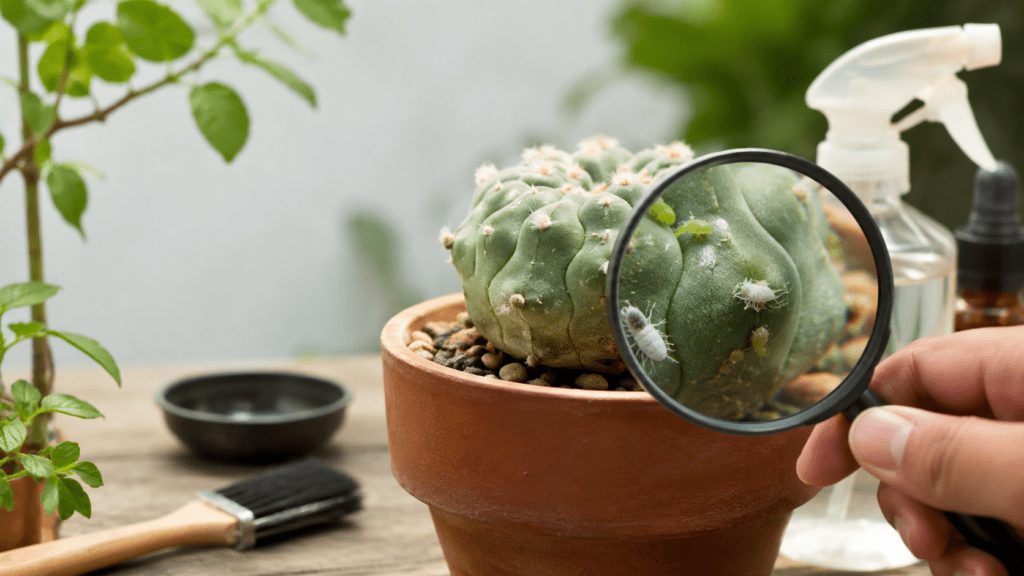
Move it away from other cacti, succulents, seedling trays, and houseplants. - Inspect with magnification.
Use a 10x loupe, phone macro lens, or bright LED light. Check the crown wool, areoles, soil line, pot rim, and drainage hole. - Identify the pest before treating.
White cottony clusters usually mean mealybugs. Fine webbing and bronzing suggest spider mites. Flat brown discs often indicate scale. - Remove visible insects manually.
Use a soft artist’s brush, dry cotton swab, or a cotton swab lightly dampened with 70% isopropyl alcohol. - Avoid soaking the plant.
Peyote is especially vulnerable to moisture trapped in its crown wool, areoles, or around its taproot. - Inspect the roots if symptoms persist.
Root mealybugs often hide below the soil line. A cactus that remains weak despite apparently correct care may need a root inspection. - Monitor for at least three to four weeks.
One treatment rarely solves an infestation. Eggs, crawlers, and hidden pests can emerge after the visible adults are gone.
Common Pests & How to Protect Your Peyote
Not every spot, scar, or speck on a peyote cactus is an infestation. Old corking, healed sun damage, wool fragments, mineral deposits, and natural epidermal texture can all resemble pests.
Use this pest-identification table before applying anything.
| Pest | What You Will See | Where to Look | Best First Action |
|---|---|---|---|
| Mealybugs | White cottony fluff, waxy blobs, sticky residue | Areoles, crown wool, soil line, roots | Isolate and manually remove |
| Root mealybugs | White powdery wax around roots or drainage holes | Root zone, pot rim, underside of root ball | Unpot, clean roots, replace substrate |
| Scale insects | Tan, brown, gray, or black shell-like bumps | Epidermis, areoles, protected creases | Lift or brush off carefully; treat crawlers |
| Spider mites | Fine webbing, dull skin, stippling, bronzing | Crown, creases, shaded side of cactus | Confirm with magnification; use targeted contact control |
| Fungus gnats | Tiny flying gnats around pot; larvae in wet mix | Soil surface and drainage holes | Reduce excess moisture and monitor with sticky traps |
| Thrips or aphids | Tiny moving insects, scarring around flowers | Flower buds, fresh growth, crown | Isolate and remove promptly |
| Slugs or snails | Missing tissue, slime trails, fresh chew marks | Outdoor benches, pots, nighttime inspections | Hand-remove and exclude |
Mealybugs: The Most Common Peyote Cactus Pest
Mealybugs are one of the most common pests on collectible cacti. They are soft-bodied sap-feeders covered in white, powdery wax.
On peyote, they frequently hide inside:
- Woolly crown tissue
- Areoles
- The narrow gap between the cactus and soil
- Pot rims
- Drainage holes
- Roots and root necks
A small infestation may look harmless. It is not. Mealybugs weaken the cactus, attract ants, create sticky honeydew, and can leave permanent scarring on a very slow-growing plant.
How to Remove Mealybugs Safely
Start with physical removal.
- Put on gloves.
- Use a 10x loupe or phone camera.
- Dip a cotton swab lightly in 70% isopropyl alcohol.
- Touch the insect directly rather than soaking the surrounding tissue.
- Use a soft brush to remove dead insects and wax residue.
- Keep liquid out of the crown wool and soil.
Do not saturate peyote with alcohol. Alcohol can damage epidermal tissue, especially in direct sun, high heat, or on a dehydrated plant.
After treatment, keep the plant in bright indirect light for a day or two. Reinspect in five to seven days.
Root Mealybugs: The Hidden Threat to Valuable Cacti
Root mealybugs are more dangerous than surface mealybugs because they can go unnoticed for months.
They live beneath the soil, feed on roots, and thrive in old, overly organic, compacted, or persistently damp potting mixes.
Common signs include:
- A peyote that looks deflated despite proper watering practices
- White wax around drainage holes
- Ant activity near the pot
- Weak or stalled growth during the active season
- A plant that never seems to rehydrate normally
- White cottony material around roots during repotting
Root mealybugs require more than a surface spray. The most reliable solution is a careful root-zone reset.
Scale Insects: The Brown Bumps That Do Not Brush Away Easily
Scale insects often look like tiny, flat shells stuck to the cactus skin. They can be tan, brown, dark gray, or nearly black.
Unlike mealybugs, mature scale may not move visibly. Their crawler stage is the mobile stage, and it is often the easiest stage to control.
The University of California Integrated Pest Management program’s Scale Insects Pest Notes explains why timing and repeated monitoring matter: adult scale can be protected beneath waxy coverings.
For a small peyote cactus collection:
- Remove individual scale carefully with a dampened cotton swab.
- Use a soft wooden skewer only if you can avoid scraping the skin.
- Inspect weekly for new, tiny crawlers.
- Use a labeled insecticidal soap or horticultural oil only after testing a small area.
Do not aggressively scrape scale off the cactus. The cosmetic wound may be worse than the pest damage.
Spider Mites: Tiny Pests That Cause Permanent Bronzing
Spider mites are not insects. They are arachnids, and they thrive in hot, dry, stagnant conditions.
On peyote cactus, spider mite damage often appears as:
- Dull, dusty-looking skin
- Fine stippling or pale specks
- Rusty or bronzed epidermis
- Fine webbing near the crown or areoles
- Damage concentrated on the protected or shaded side
The University of Minnesota Extension spider mite guide notes that mites are extremely small and are often identified by their damage before the pests themselves are noticed.
Use magnification before deciding you have mites.
For light infestations:
- Isolate the cactus.
- Use a soft brush to disturb visible webbing.
- Remove mites with a barely dampened swab where possible.
- Apply a labeled insecticidal soap or horticultural oil only after a patch test.
- Keep the cactus out of direct sun until the treatment is completely dry.
Avoid repeated heavy spraying. Peyote does not benefit from constant wetting.
Fungus Gnats: A Pest Problem That Usually Starts With the Soil
Adult fungus gnats are annoying, but their larvae are the actual concern. The larvae can feed on fine roots and thrive in wet, organic potting media.
A few fungus gnats around a peyote pot usually mean the root zone is staying wet too long.
Your first corrective actions should be cultural, not chemical:
- Let the substrate dry appropriately between waterings.
- Improve airflow around the pot.
- Remove decaying plant debris from the soil surface.
- Use yellow sticky cards to monitor adult activity.
- Consider replacing an overly peat-heavy or decomposed mix.
A biological larvicide containing Bacillus thuringiensis israelensis (BTI) may be an option where it is legally labeled for the intended use. Follow the exact product label and avoid turning the treatment into repeated unnecessary soil saturation.
The Lowest-Risk Treatment Ladder for Peyote Cactus Pests
The safest treatment is not always the weakest treatment. It is the treatment that matches the pest while causing the least stress to the cactus.
Use this escalation ladder.
Level 1: Quarantine and Manual Removal
This is the preferred first step for isolated mealybugs, scale, aphids, and small spider mite outbreaks.
Useful tools include:
- 10x hand lens or phone macro lens
- Bright LED flashlight
- Fine-tip cotton swabs
- Soft artist’s paintbrush
- Bamboo skewer
- Nitrile gloves
- Yellow sticky cards
- Clean paper towel or white inspection tray
A white tray is especially useful. Gently tap or brush around the pot and crown over the tray. Moving insects become easier to see.
Level 2: Targeted Alcohol Dabbing
A cotton swab lightly dampened with 70% isopropyl alcohol can kill exposed mealybugs and soft-bodied pests on contact.
Use it correctly:
- Test one small, inconspicuous area first.
- Avoid applying in harsh sun or high temperatures.
- Do not pour alcohol into the crown.
- Do not spray the entire cactus casually.
- Do not combine alcohol with soap, oil, or other treatments.
- Recheck the plant after 24 to 48 hours for discoloration.
Alcohol works best as a precision tool. It is not a substitute for monitoring or root inspection.
Level 3: Labeled Insecticidal Soap or Horticultural Oil
If pests are widespread or recurring, a properly labeled insecticidal soap or horticultural oil may be appropriate.
These products work through direct contact. Coverage matters, but overapplication creates risk.
Before using one:
- Confirm that the product is labeled for ornamental plants in your jurisdiction.
- Read the full label, including temperature restrictions and application intervals.
- Patch-test a small area of the cactus.
- Keep the plant shaded until the application dries.
- Avoid applying to a stressed, dehydrated, freshly repotted, or sun-exposed cactus.
Natural does not automatically mean harmless. Neem oil, horticultural oil, insecticidal soap, essential oil blends, and homemade dish-soap sprays can all damage cactus skin when misused.
Level 4: Biological Controls
Beneficial insects can work well in greenhouse-scale collections, but they are not always practical for a single potted peyote cactus.
Potential options include:
- Predatory mites for spider mite control
- Lacewing larvae for aphids and soft-bodied pests
- Cryptolaemus montrouzieri beetles for larger mealybug problems
Biological controls require the right temperature, humidity, pest population, and environment. They also perform poorly if pesticide residues are still active.
For a small home collection, manual removal and careful monitoring are often more reliable.
Level 5: Systemic Insecticides as a Last Resort
Systemic insecticides can reach sap-feeding pests that are difficult to contact directly. However, they are not a default solution for peyote cactus.
They may create residue concerns, may not fit a residue-sensitive collection protocol, and must only be used according to the product label and local law.
If your plant is maintained for ceremonial, institutional, research, or other purity-sensitive reasons, establish your pesticide policy before applying anything. No treatment can honestly be described as “residue-free” once a pesticide has been applied.
For a severe infestation, consult a qualified local horticulture professional, licensed pest-control provider, or extension resource rather than escalating through random products.
How to Treat Root Mealybugs Without Harming the Taproot
Peyote has a sensitive taproot. Root work should be deliberate, clean, and minimal.
Step 1: Work With a Dry Root Ball
Do not unpot a freshly watered cactus. Let the substrate dry first so it falls away more easily and reduces the chance of damaging roots.
Step 2: Remove the Cactus Carefully
Support the cactus body without squeezing it. Tip the pot and allow the root ball to slide out.
Inspect:
- The root neck
- Fine roots
- Taproot surface
- Pot walls
- Drainage hole
- Old substrate for white waxy residue
Step 3: Remove Infested Soil Completely
Discard infested soil in a sealed bag. Do not reuse it, compost it, or dump it near your collection.
Use a soft brush to remove dry soil and visible pests. Avoid cutting healthy roots unless there is confirmed rot or severe root damage.
Step 4: Clean the Pot and Reset the Growing Medium
Wash the old pot thoroughly with hot, soapy water. A new pot is often the easiest option.
Repot into a fresh, free-draining, predominantly mineral cactus mix. The goal is not merely “sterile soil.” The goal is a root zone that does not remain wet, compacted, or attractive to root pests.
Step 5: Allow Root Disturbance to Dry Before Watering
After root work, keep the cactus dry until the root surface has had time to heal. The exact wait depends on root disturbance, climate, and growing conditions.
For meaningful root cleaning or repotting, many collectors wait roughly one to two weeks before watering. If roots were minimally disturbed, the interval may be shorter. If the taproot was damaged, a longer dry recovery may be prudent.
Prevent Bugs From Returning: A Peyote Cactus Prevention System
Pest prevention is far easier than pest eradication.
Use this routine for every cactus entering your collection.
Quarantine New Plants for Three to Four Weeks
Do not place new cacti directly beside established specimens.
During quarantine:
- Inspect twice weekly.
- Check crown wool and areoles with magnification.
- Inspect drainage holes.
- Look for ants, webbing, wax, or moving specks.
- Use a yellow sticky card nearby to monitor flying pests.
- Keep separate tools, trays, and watering equipment if possible.
Keep the Root Zone Appropriate for Cactus Culture
Most recurring pest problems are linked to environmental stress.
Avoid:
- Old, compacted, overly organic substrate
- Pots that stay wet for extended periods
- Poor drainage
- Dead plant matter on the soil surface
- Crowded collections with no airflow
- Frequent overhead misting
- Excess nitrogen that produces vulnerable soft growth
A healthy peyote cactus is not immune to pests, but it is more resilient and easier to treat.
Inspect the Four High-Risk Zones
Every week, inspect:
- The woolly crown
- The areoles and body creases
- The soil line and pot rim
- The drainage hole and lower pot surface
This five-minute habit catches most infestations before they become collection-wide problems.
When It Is Not Actually a Bug Problem
Before treating, rule out these common look-alikes.
Natural Corking
Corking is a dry, hardened, tan-to-brown texture that often appears around the base of older cacti. It is not a pest.
Corking does not move, spread rapidly, produce honeydew, or leave white wax.
Sun Stress or Sunburn
Sun damage may appear as bleached, tan, red, orange, or hardened patches. It can resemble spider mite bronzing.
Check for webbing, mites, or stippling before applying pesticides.
Root Rot
Rot often causes soft, dark, translucent, foul-smelling, or collapsing tissue. Insecticide will not fix rot.
If rot is suspected:
- Stop watering.
- Isolate the cactus.
- Avoid repeatedly applying pest products.
- Seek a specialist diagnosis if the taproot or crown is affected.
Mineral Deposits or Hard-Water Residue
White crust on the soil or pot rim is often mineral buildup, not mealybug wax.
Mealybug residue looks cottony or fibrous and is usually associated with visible insects.
Expert Pest-Control Rules for Residue-Sensitive Collections
For collections maintained under strict ceremonial, cultural, research, or personal purity standards, pest control should be documented rather than improvised.
Create a simple log with:
- Date of inspection
- Pest identified
- Plant location
- Treatment used
- Product active ingredient, if any
- Follow-up date
- Results after one week and one month
This protects the collection and prevents accidental repeat applications.
For the most conservative approach, prioritize:
- Isolation
- Manual removal
- Root-zone sanitation
- Clean mineral substrate
- Environmental correction
- Beneficial insects where practical
- Clearly documented treatment history
Avoid assuming that a product is acceptable simply because it is marketed as “organic,” “natural,” or “plant-based.”
FAQ: How To Get Rid of Bugs on Peyote Cactus
What bugs are most common on peyote cactus?
The most common pests on peyote cactus are mealybugs, root mealybugs, scale insects, spider mites, fungus gnats, aphids, and thrips. Mealybugs and root mealybugs are especially common because they can hide in crown wool, areoles, soil crevices, and roots.
How do I get rid of mealybugs on peyote cactus?
Isolate the cactus, inspect it under magnification, and remove visible mealybugs with a soft brush or cotton swab lightly dampened with 70% isopropyl alcohol. Avoid soaking the crown or soil. Reinspect every five to seven days because eggs and hidden insects may survive the first treatment.
How do I know if my peyote cactus has root mealybugs?
Signs of root mealybugs include white wax around drainage holes, unexplained weakness, poor rehydration, ants around the pot, and white cottony material on roots when repotting. The most reliable confirmation comes from carefully inspecting the dry root ball.
Can I use neem oil on peyote cactus?
Neem-based products may be used only if the label permits the intended ornamental use and the cactus tolerates a small patch test. Keep the cactus out of direct sun after application. Do not assume neem is residue-free or automatically safe for a plant maintained under strict ceremonial or research standards.
Why are fungus gnats around my peyote cactus?
Fungus gnats usually indicate that the potting medium is remaining too moist or contains excessive decomposing organic material. Adult gnats are a warning sign. Improve drainage, reduce unnecessary watering, remove surface debris, and use sticky traps to monitor adults.
When should I repot a peyote cactus with pests?
Repot when you suspect root mealybugs, find pests emerging from drainage holes, or discover old, compacted, contaminated substrate. Work with a dry root ball, discard infested soil, clean or replace the pot, and replant into fresh, free-draining mineral substrate.
Can pest scars disappear from peyote cactus?
Most scars, punctures, bronzing, and corky patches will not fully disappear because peyote grows slowly. The goal is to stop the damage early and preserve healthy tissue. New growth may improve the plant’s overall appearance over time, but old damage often remains visible.
Recommended Internal Link Placements
- After the root mealybug section
Anchor text: how to repot peyote cactus without damaging the taproot - Inside the prevention section
Anchor text: best mineral soil mix for peyote cactus care - After the spider mite diagnosis section
Anchor text: how to identify cactus pests before treatment
References and Safety Sources
- U.S. Environmental Protection Agency: Integrated Pest Management Principles
- University of California IPM: Scale Insects Pest Notes
- University of Minnesota Extension: Spider Mites
Conclusion: Protect the Plant Without Overreacting
The safest way to get rid of bugs on peyote cactus is to resist the urge to spray first. Isolate the plant, identify the pest, remove what you can manually, inspect the roots when necessary, and correct the conditions that allowed the infestation to begin.
A few minutes of careful inspection can prevent years of cosmetic damage to a slow-growing cactus.
Take action today: isolate the cactus, inspect the crown and drainage hole with a 10x loupe, photograph what you find, and use the lowest-risk treatment that matches the actual pest.
