
Blog
Peyote Cactus Watering Schedule
Jul
What Is The Perfect Peyote Cactus Watering Schedule? (And Why Most Growers Fail)
Understanding Your Plant: Biology Dictates Water Needs
Before discussing frequency, we must discuss biology. Standard cactus advice often suggests “drought tolerance,” which is true but incomplete. Peyote is distinct because of its unique root system. Unlike columnar cacti with taproots digging deep underground for moisture, Peyote possesses a fibrous, shallow root network designed to catch surface runoff quickly.
The Danger Zone of Shallow Roots
Because their roots sit near the surface, they are incredibly sensitive to sitting in wet media. This is the primary reason why the standard advice for succulents often fails here.
- Over-watering: Rot sets in within days because the stem tissue is soft and susceptible to fungal entry.
- Under-watering: The crown (growing tip) shrinks before the body, potentially killing the heart of the plant.
When creating a plan for [how often to water peyote cactus], you must account for this anatomy. A slow-draining mix kills fast. A fast-draining mix saves lives.
The Golden Rule: The Soak and Deep-Dry Method
The core principle for all [peyote cactus watering schedule] planning is the “Soak and Dry” technique. However, we refine this standard advice to fit the fragility of Lophophora.
1. The Soak
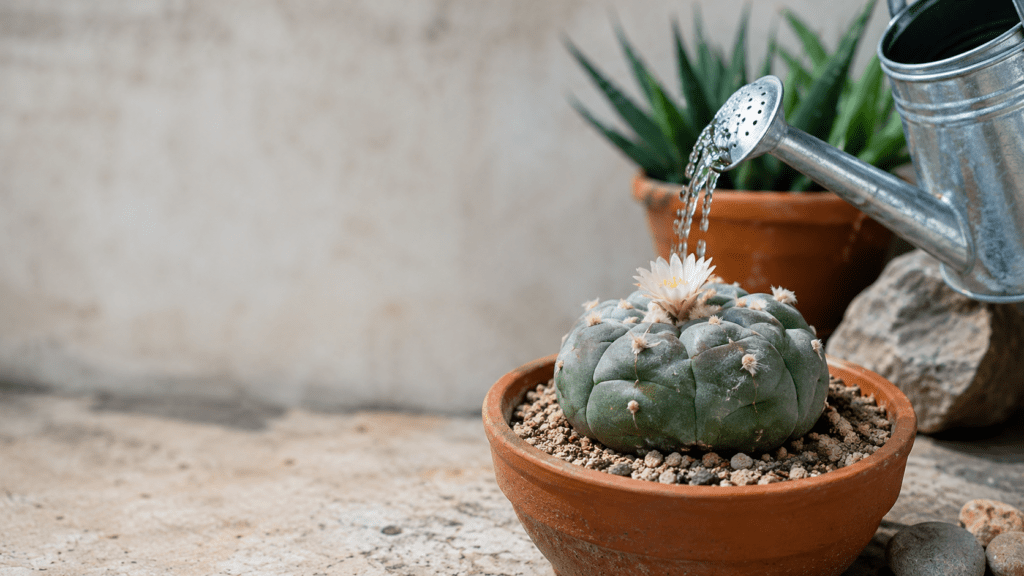
When you decide it is time to water, do not mist or lightly sprinkle. You must water until liquid begins to actively run off the bottom of the drainage holes. This ensures the entire root ball wets up, not just the surface layer.
2. The Deep-Dry
This is the critical differentiator. Once watered, the plant should remain dry for 10–14 days minimum.
- Why? Moisture lingering in the soil invites Pythium and Phytophthora. These are invisible killers.
- The Test: Stick a wooden chopstick or skewer into the soil. Pull it out. If it comes out damp or smells earthy, do not water again. Wait another week.
In our experience, patience is the only tool you can’t buy at a garden store.
Seasonal Breakdown: Adjusting for Active Growth vs. Dormancy
Cyclical watering is essential. A fixed “once a week” rule will fail immediately. You must align your schedule with the plant’s biological clock.
Spring: Awakening Phase
As temperatures rise above 50°F (10°C), metabolism kicks in. The plant grows a new outer layer (epidermis) and may produce spines or flowers.
- Frequency: Every 10–14 days.
- Volume: Full soak.
- Strategy: Monitor new growth carefully. If the skin cracks or wrinkles slightly after watering, the previous interval was too long.
Summer: Peak Performance
This is peak hydration demand, especially if outdoors. High heat increases evapotranspiration.
- Frequency: Every 7–10 days (Indoors) / Every 5–7 days (Outdoors/High Sun).
- Volume: Heavy soak.
- Risk Factor: Heat stress. If it exceeds 95°F (35°C) for prolonged periods, reduce frequency to prevent sun scald, as water conducts heat through the leaf/stem.
Autumn: Prep For Rest
Temperatures drop. Growth slows. The plant stops expanding.
- Frequency: Stretch to 2–3 weeks.
- Volume: Reduce soak volume gradually. Less water means less risk of freezing within the cell walls later on.
- Action: Stop fertilizing. Stop watering heavily. Let the plant rest naturally.
Winter: Dormancy Mode
Dormancy is non-negotiable for long-term health. Even in heated homes, light is reduced.
- Frequency: Once a month or less.
- Volume: Just enough to keep the roots alive, never fully soaked.
- Warning: Do not place near drafty windows where cold air hits the wet soil. This causes root shock.
Environmental Variables That Change The Frequency Of Peyote Watering Schedule
If two people live in different zip codes, they cannot use the same calendar. Climate variables act as modifiers to the base schedule.
1. Humidity Levels
- High Humidity (Coastal/Tropical): Evaporation is low. Increase the gap between waterings by 30–50%. Wet soil + high humidity = fungal explosion.
- Low Humidity (Desert/Arid): Evaporation is rapid. Follow the standard 10-day baseline.
2. Indoor vs. Outdoor Lighting
Light intensity dictates water loss.
- Grow Lights: High UV output accelerates transpiration. Treat these similarly to outdoor spring plants.
- Standard Windows: East/West facing provides good light. North-facing rooms may require watering only once every 30–45 days.
- Dark Corners: Avoid these. Without light, the plant consumes stored energy rather than using water for photosynthesis.
3. Pot Material Matters
The container holds half the battle.
- Ceramic/Glazed: Holds moisture longer. Water less frequently.
- Unglazed Clay (Terra Cotta): Breathable. Dries rapidly. Increase water frequency slightly but monitor closely.
- Plastic: Retains highest moisture. Use only with excellent soil mix.
- Terracotta Recommendation: We strongly suggest unglazed terracotta for beginners. The visual cue of color change helps you see when the pot is drying out.
Diagnosing Your Plant: Signs It Needs Water
Relying on a calendar is lazy gardening. Relying on your eyes is strategic. Here is what to look for when trying to determine [how often to water peyote cactus].
The Shape Shift
A healthy Peyote is firm and round. As thirst sets in, it changes shape.
- Surface Wrinkling: Fine lines appear across the ribs.
- Concavity: The center flattens or dips slightly.
- Shrinkage: The overall diameter decreases visibly.
If you notice wrinkling, water immediately. However, wait for slight wrinkling; do not wait for total collapse.
The Color Change
- Dehydrated: Turns from a vibrant green-gray to a dull, silvery-blue or grayish-white.
- Over-Watered: Turns translucent yellow, orange, or black. This is a fatal sign of rot. If a spot turns black, cut it away immediately with sterilized tools.
Root Inspection (Advanced)
If you suspect issues, remove the plant from the pot.
- Healthy Roots: Firm, white, or tan. Smell sweet.
- Bad Roots: Mushy, brown/black. Smell sour or musty.
The Foundation: Soil Composition and Potting Media
Watering efficiency relies entirely on drainage capability. You cannot fix bad soil with perfect watering habits. If the water sits, it will kill the plant regardless of frequency.
The Ideal Mix Ratio
Do not buy “Cactus & Succulent Potting Mix” off the shelf. It usually retains too much peat moss. Make your own to control the texture.
- 50% Inorganic Grit: Pumice, lava rock, or coarse sand. This creates air pockets.
- 20% Organic Component: Low nutrient orchid bark or well-aged compost.
- 30% Mineral Buffer: Perlite or crushed granite. Prevents compaction.
Why this matters: In a dense commercial mix, a single excess watering event traps moisture around the stem, causing collar rot. Our custom mix drains in minutes.
Drainage is Non-Negotiable
Your pot must have a hole in the bottom. No exceptions. If you lack drainage, use the capillary watering method instead, placing the pot in a tray of water for 5 minutes only. This encourages root growth downward toward moisture.
Troubleshooting Common Watering Mistakes
Even experts slip up. Identifying errors early saves the specimen.
The “Frequent Light Water” Trap
Many hobbyists think they are being helpful by giving a little sip of water every few days.
- The Damage: This keeps the topsoil constantly moist but fails to penetrate the root zone. The plant develops roots only in the wet upper layer, making it unstable and prone to falling over.
- The Fix: Stop small sips. Commit to full soaks followed by total drying.
Freezing Water Shock
Using cold tap water in winter can shock warm root systems.
- The Fix: Let water sit in a jug on the counter for 24 hours to reach room temperature before watering.
Misting Myths
Avoid misting the plant surface unless humidity is critically low (below 20%).
- The Risk: Water droplets on the body can magnify sunlight and cause burns, or trap humidity near the crown leading to soft rot. Mist the air around the plant, not the plant itself.
Ethical Considerations in Cultivation
Part of the mission of modern succulent enthusiasts is conservation. Lophophora williamsii is native to specific regions in Texas and Mexico. Due to its psychoactive properties and habitat degradation, it is often listed under various regulations (such as CITES Appendix II).
- Legal Status: In many jurisdictions, possession of live plants requires registration or permits. Always check federal and local laws before purchasing.
- Sourcing: Buy from licensed nurseries. Do not source wild-collected specimens. Wild populations are threatened; propagation is the responsible choice.
- Growth Speed: Understand that these grow slowly. A seed takes 2-3 years to become a collectible size. Patience is part of the ethic.
By adhering to strict watering guidelines, you extend the life of cultivated plants, reducing the need to harvest new specimens to replace old ones. Responsible care is conservation.
The Role of Temperature in Absorption
There is a biological threshold below which the roots stop drinking effectively.
The 50°F (10°C) Threshold
Below this temperature, metabolic processes in the plant slow significantly.
- Scenario: Watering a peyote cactus when ambient temps are 40°F.
- Result: The plant absorbs almost no water, but the moisture remains in the pot. This freezes in the cells or rots the roots due to prolonged exposure to cold liquid.
- Rule: If the air temp is below 50°F, cut watering completely, except for very brief “emergency” top-ups in extreme drought conditions where the plant is visibly dying of desiccation, not rot.
Summer Heat Stress
Above 95°F (35°C), the stomata (pores) close to conserve water.
- Observation: The plant shuts down photosynthesis temporarily to survive the sun.
- Advice: Shade the plant during peak afternoon hours. If the soil dries out too fast, provide morning water only, allowing it to cool down overnight.
Summary: Your Actionable Plan
To summarize the [peyote cactus watering schedule] for easy implementation:
- Check Soil Moisture First: Stick your finger or a skewer in. Only water if dry deep down.
- Soak Fully: When you water, let it drain freely. Do not leave standing water.
- Seasonal Adjustment: Spring/Fall = Moderate. Summer = Frequent. Winter = Rare.
- Environmental Factors: Humidity and Wind speed up or slow down drying times.
- Observe Symptoms: Wrinkling needs water; black/yellow discoloration needs immediate action (cutting or moving).
Remember, a slightly shriveled peyote is a survivor. A swollen, mushy peyote is lost. Overthinking leads to fear. Underthinking leads to negligence. Aim for balance.
Expert Corner: The “Knuckle Test”
For advanced growers who want absolute precision, try the Knuckle Test. Dig your knuckles about 2 inches into the soil (near the edge, avoiding roots).
- Dry Skin: Time to water.
- Cool/Damp Skin: Do not water.
- Warm/Wet Soil: Potential overheating or bacterial activity. Air out the pot.
Conclusion: Master Your Care Routine
Growing a Lophophora williamsii is a lesson in restraint. It teaches you that the environment you create is just as important as the water you supply. By mastering the [peyote cactus watering schedule], you transition from a novice guesser to a steward of rare botanical life.
You now have the data to adjust for your specific climate, understand the signs of distress, and respect the dormancy cycles that define this species. Don’t rush the growth. Respect the roots. And always prioritize drainage over retention.
Your collection deserves care that goes beyond the surface. Apply these strategies today, observe your peyotes for the next month, and watch them respond with resilience.
Ready to optimize your entire indoor garden? Check out our [Complete Indoor Succulent Care Guide] for advice on lighting, fertilization, and pest management tailored to arid climates.
FAQ Section
What is the best way to water a peyote cactus?
Use the Soak and Deep-Dry method. Pour water until it runs freely from the drainage holes, then allow the soil to dry completely (minimum 10 days) before the next application. This mimics natural rain patterns and prevents root rot.
How often to water peyote cactus in the winter?
During the winter dormancy period, reduce watering to once a month or less. Lower light levels and cooler temperatures mean the plant uses almost no water. Keep the soil barely damp to prevent dehydration without risking frost damage inside the soil.
Why is my peyote cactus turning yellow or brown?
Yellow or browning usually indicates over-watering or root rot. The stems lose turgor pressure and turn translucent before becoming soft and mushy. Cut away affected areas immediately with sterilized tools and let the remaining plant callus over before replanting in fresh, dry soil.
Can you put peyote in water to propagate?
No, Lophophora williamsii does not propagate well in standing water. It prefers dry cutting propagation with a calloused wound placed on dry soil. Submerging the base will almost certainly cause the parent plant to rot before roots form.
Does high humidity require me to water less often?
Yes. High humidity slows evaporation rates from the potting medium. If your indoor humidity is above 60%, increase the interval between waterings by 30–50% compared to low-humidity environments.
How do I know if the soil is too wet?
Stick a wooden skewer into the soil near the rim. If it smells earthy/musty or feels cool and slick when removed, the soil is too wet. Healthy soil should smell neutral and feel gritty/dry when pulled out.
Is it safe to buy peyote cacti for cultivation?
Laws vary by country and state. Lophophora williamsii contains mescaline and may be controlled in some jurisdictions. Always purchase from licensed nurseries that sell legally propagated specimens and verify your local regulations regarding possession.
Final Thoughts
Botanical mastery is not about having a “green thumb”; it is about understanding the rules of nature and bending them only where necessary. With this [peyote cactus watering schedule] guide, you have the blueprint. Now, execute it with discipline. Watch, learn, and grow.
Start your water tracking log today. Write down the date you last watered, note the weather, and record the appearance of the plant. In three months, you will have a dataset that proves exactly what works for your specific setup.
Stay thirsty, stay dry, and happy growing.
