
Blog
Lophophora Seed to Maturity
Sep
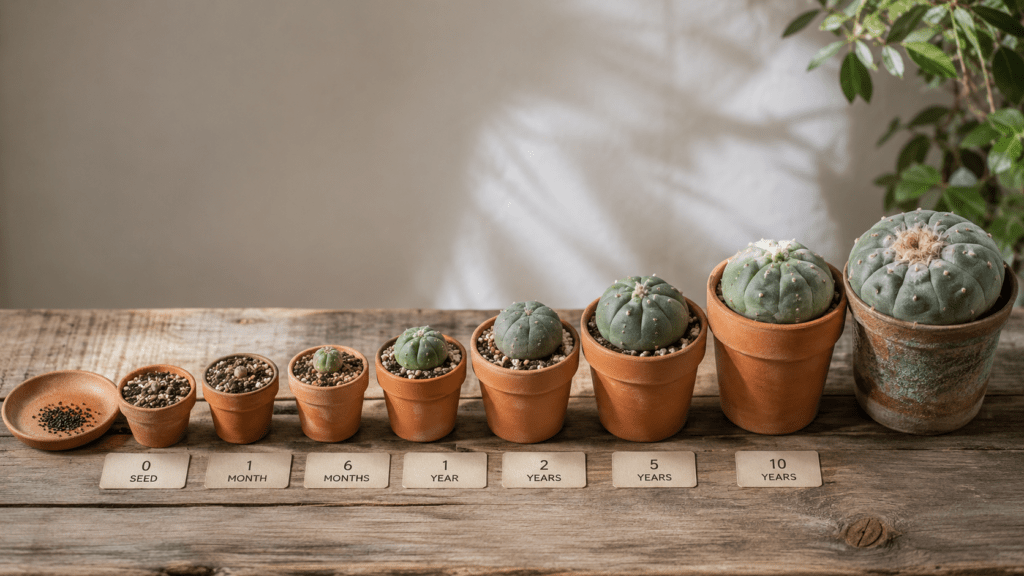
Lophophora Seed to Maturity – Our 10-Year Growing Blueprint with Real Growth Rate Data Answers It All
Introduction: The Appeal of a Decade-Long Study
Frame the article around patience, documentation, and conservation rather than maximizing cultivation speed. Explain that growth varies widely according to genetics, provenance, climate, root health, dormancy, and whether the plant is grown in a controlled institutional setting.
Avoid presenting a universal “growth rate by year.” A responsible article should explain why isolated anecdotes are not equivalent to scientific data.
1. What Is Lophophora? – Lophophora Seed to Maturity
Cover:
- The genus Lophophora
- Commonly discussed species such as Lophophora williamsii
- The distinction between botanical identity and common names
- Why taxonomic identification can be difficult
- Why alkaloid content and legal status must not be assumed from appearance alone
A useful authority source is Kew’s Plants of the World Online, which provides taxonomic information and accepted plant names.
2. Why Lophophora Growth Is So Slow
Discuss the broad biological factors that influence development:
- Slow-growing succulent physiology
- Seasonal growth and dormancy
- Water-storage adaptations
- Root sensitivity
- Genetic variation
- Climate and latitude
- Stress caused by poor provenance or wild collection
Keep this section educational rather than instructional. Explain that “slow” does not mean inactive; small annual changes can represent substantial biological development.
3. A High-Level Ten-Year Observation Framework
Instead of prescribing growing conditions, present a non-operational framework for lawful observation.
Years 0–1: Establishment
Record:
- Source and legal provenance
- Date of acquisition or germination
- Initial condition
- Photograph with a scale reference
- Evidence of establishment or decline
Do not claim that every specimen will reach a particular diameter during this period. Early development varies considerably.
Years 2–3: Juvenile Development
Track:
- Changes in body shape
- Root or crown condition when visible without destructive handling
- Seasonal activity
- Response to normal local weather patterns
- Survival and health status
This is a useful period for comparing individuals from the same documented source, but not for making universal claims about the species.
Years 4–6: Structural Development
Potential observations include:
- Increased body volume
- Changes in rib or tubercle definition
- Development of mature surface characteristics
- Seasonal flowering potential
- Long-term response to local conditions
Flowering should be described as a possibility, not a guaranteed milestone.
Years 7–10: Mature-Plant Observation
At this stage, a study may examine:
- Flowering frequency
- Seasonal dormancy
- Offsets or clonal behavior, where legally relevant
- Long-term survival
- Year-to-year changes in size and form
- Whether growth appears to plateau
A ten-year record is much more valuable when it includes all specimens, including failures and losses, rather than only the healthiest example.
4. How to Collect Better Growth-Rate Data
Recommend a consistent observational method:
- Use the same camera position whenever possible.
- Photograph with a ruler or fixed scale.
- Record the date and local weather conditions.
- Measure the same attribute each time.
- Separate diameter, height, flowering, and survival data.
- Note whether the plant experienced dormancy or major stress.
- Keep provenance records.
- Avoid comparing plants from unknown sources as if they were genetically identical.
A basic spreadsheet can include:
- Specimen ID
- Taxon or provisional identification
- Legal source
- Acquisition date
- Observation date
- Diameter
- Height
- Flowering status
- Visible health notes
- Weather or seasonal context
- Photograph reference
5. Why Published “Growth by Year” Charts Can Mislead
Warn readers about:
- Small sample sizes
- Selective reporting
- Different measurement methods
- Confusing age with time in cultivation
- Unreported dormancy
- Different taxa being grouped together
- Plants being grafted or otherwise grown under atypical conditions
- Claims based on forum anecdotes rather than documented records
A strong article should label data as:
- Measured
- Estimated
- Anecdotal
- Institutional
- Unverified
That distinction improves credibility and demonstrates genuine expertise.
6. Conservation and Legal Sourcing
Emphasize:
- Never remove plants from the wild.
- Avoid unverified seeds or specimens described as “wild harvested.”
- Purchase only from reputable, legally operating sources.
- Retain invoices, provenance statements, and permits where applicable.
- Check national and local regulations before acquiring, transporting, or propagating material.
- Work with botanical gardens, universities, or licensed conservation programs where possible.
Useful high-authority references include:
- CITES Species Database
- IUCN Red List
- Kew Plants of the World Online
- Relevant national wildlife, customs, or controlled-substance authorities
Legal status can differ by jurisdiction, and a plant’s botanical name does not automatically determine whether possession or propagation is lawful.
7. Ethical Alternatives for Enthusiasts
Readers interested in the genus can contribute without wild collection by:
- Supporting habitat conservation
- Purchasing legally propagated ornamental cacti
- Joining a botanical society
- Donating to seed-bank or habitat-restoration initiatives
- Photographing and documenting legally held specimens
- Contributing anonymized observational data to a recognized research project
- Visiting accredited botanical collections
8. Expert Corner
Expert Corner: The most valuable long-term record is not the fastest-growing specimen. It is the cleanest record—known provenance, consistent measurements, complete photographs, and honest reporting of setbacks.
9. Pitfall Alert
Pitfall Alert: Never use a single unusually large or fast-growing plant to establish a “normal” ten-year growth rate. Exceptional specimens can distort expectations and encourage harmful cultivation practices.
Safe FAQ Topics – Lophophora Seed to Maturity
What is Lophophora?
Lophophora is a genus of small, slow-growing North American cacti. Some taxa are associated with psychoactive alkaloids, so legal and ethical considerations are important.
How long does Lophophora take to mature?
There is no universal timetable. Development depends on genetics, provenance, climate, dormancy, health, and cultivation history. A responsible source should present broad observations rather than guaranteed milestones.
Why are Lophophora growth-rate claims inconsistent?
Many reports use different measurement methods, unknown plant ages, different taxa, or incomplete records. Some also compare ordinary plants with grafted or otherwise atypical specimens.
When can Lophophora flower?
Flowering varies by individual and growing history. It should be treated as a possible developmental event rather than a guaranteed year-specific milestone.
Can I legally grow Lophophora?
That depends on your country, state, province, and the specific taxon involved. Consult current official government guidance before acquiring or propagating any specimen.
How can I support Lophophora conservation?
Buy only legally propagated material, avoid wild-collected plants and seeds, support habitat protection, and contribute to reputable botanical or conservation organizations.
