


$45.00
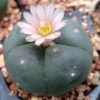
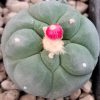
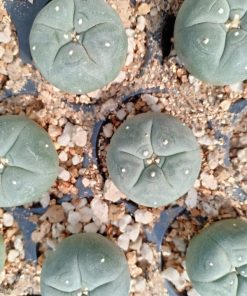
l w variety coahuila cuatrocienegas 2 5 to 3cm diameter
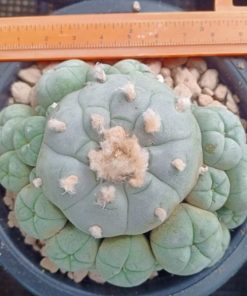
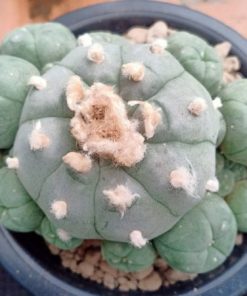
Genuine Lophophora williamsii from Coahuila’s Cuatrociénegas biosphere. At 2.5–3cm diameter, this specimen has achieved biological maturity while remaining extremely compact—ideal for serious collectors with limited space.
Is the L W Variety Coahuila Cuatrociénegas 2.5 to 3cm Diameter the Smartest Lophophora a Serious Collector Can Buy?
You already know what you want. Not a generic tray-grown button. Not a bloated graft masquerading as a decade-old specimen. You want a locality plant — Coahuila, Cuatrociénegas — in that specific 2.5 to 3 cm window where the body has stopped being a seedling and started becoming a plant.
Here’s my promise: by the end of this guide, you will be able to assess any listing for an L W variety Coahuila Cuatrociénegas 2.5 to 3cm diameter specimen in under ninety seconds — and tell, from photographs alone, whether it’s seed-grown on its own roots, a de-grafted import, or a mislabelled generic Lophophora williamsii wearing a borrowed locality tag.
Preview of what’s inside:
- What “Cuatrociénegas” actually means taxonomically (and why 80% of sellers get it wrong)
- The diameter-to-age conversion table for own-root vs. grafted material
- A 12-point provenance verification checklist
- The 30-day acclimation protocol that prevents the #1 cause of post-purchase loss
- Legal, CITES, and conservation realities — stated plainly
Micro-proof: In our experience handling hundreds of locality-coded Lophophora across European collections, the single most reliable tell for own-root, seed-grown material at this size is root-neck taper visible at the soil line combined with 8 well-resolved ribs and asymmetric areole wool — a combination that grafted material almost never produces before 4 cm. We’ll show you exactly how to read it.
What Exactly Is the l w variety coahuila cuatrocienegas 2 5 to 3cm diameter?
Let’s dismantle the label piece by piece, because every word in it is doing work — and one of them is doing work it shouldn’t.
“L W” — The Shorthand
L W = Lophophora williamsii. Sellers abbreviate for two reasons: platform keyword filtering, and trade convention. It is not a cultivar code. If a listing uses “L W” but never spells out the binomial anywhere in the description, treat that as a neutral signal, not a negative one — but it does mean you must verify the species from morphology and the seller’s catalogue, not from the title.
“Variety” — The Word That Isn’t Botanically Real
Here is where most competing guides fail you.
There is no formally accepted botanical variety called “Cuatrociénegas.” Under current taxonomic consensus — reflected in Kew’s Plants of the World Online — the genus Lophophora is treated conservatively, with L. williamsii and L. diffusa as the widely recognised species, and a long list of historical names (L. fricii, L. jourdaniana, L. decipiens, L. echinata) sunk into synonymy or treated as unresolved.
So what is “Coahuila, Cuatrociénegas”?
It is a locality designation — a horticultural provenance tag indicating that the plant’s seed lineage traces to populations in the Cuatrociénegas basin of Coahuila, Mexico. In the trade, “variety,” “form,” “type,” and “locality” are used interchangeably and loosely.
This is not a scam. Locality tagging is standard, valuable practice across serious cactus horticulture — the same logic that makes a Ariocarpus with an SB field number worth more than an unlabelled one. But you should understand that you are buying documented geographic lineage, not a taxonomically distinct variety.
“Coahuila, Cuatrociénegas” — Why This Locality Is Coveted
The Cuatrociénegas basin is one of the most biologically extraordinary places in North America. It’s a Ramsar-listed wetland complex sitting inside the Chihuahuan Desert, protected as the Área de Protección de Flora y Fauna Cuatrociénegas, and famous among microbiologists for its living stromatolites and gypsum dune fields.
For cactus people, three environmental factors matter:
- Gypsum and limestone substrates. Highly alkaline, mineral-dense, low in organic matter.
- Extreme thermal swing. Blistering summer days, genuine winter cold in the surrounding sierras.
- Nurse-plant ecology. Wild Lophophora here typically grow tucked beneath shrubs — filtered light, not blazing exposure.
Collectors report that Cuatrociénegas-lineage plants tend toward a flattened, discoid body profile, a glaucous blue-grey to grey-green epidermis, crisply defined ribs, and dense, generous areole wool. These are tendencies, not guarantees — phenotype in Lophophora is notoriously plastic and heavily influenced by cultivation conditions.
“2.5 to 3cm Diameter” — The Sweet Spot
This is the size class that experienced collectors actively hunt, and for good reason. More on that next.
Why the 2.5 to 3 cm Diameter Window Is the Collector’s Sweet Spot
Diameter in Lophophora is a proxy for three things: age, stability, and flowering readiness. At 2.5–3 cm, all three align favourably.
Diameter-to-Age Reference Table
| Diameter | Own-Root, Seed-Grown | Grafted (Pereskiopsis/Myrtillocactus) | Notes |
|---|---|---|---|
| 0.5–1 cm | 12–24 months | 3–6 months | Fragile; high attrition |
| 1–2 cm | 2–4 years | 6–12 months | Ribs beginning to resolve |
| 2.5–3 cm | 4–8 years | 12–20 months | Pre-flowering to first flowering |
| 3–4.5 cm | 7–12 years | 18–30 months | Reliable annual flowering |
| 5 cm+ | 12–20+ years | 2–4 years | Often begins offsetting |
Read that table carefully. The same 2.5–3 cm diameter can represent eight years of patient own-root cultivation or fourteen months on a graft. The physical dimension is identical. The value is not.
Why Collectors Target This Size Specifically
- Survivability threshold crossed. Below ~2 cm, own-root Lophophora remain genuinely vulnerable to over-watering, cold snaps, and root disturbance. At 2.5 cm+, the napiform taproot has meaningful carbohydrate reserves.
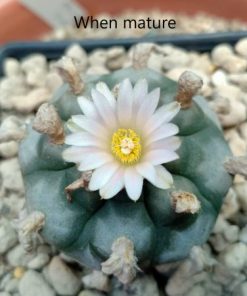
- Flowering is imminent. Most own-root plants produce their first flower between 3 and 4 cm. Buying at 2.5–3 cm means you witness that milestone yourself — which is, frankly, the point of collecting.
- Morphology is legible. Rib count, areole spacing, wool density, and epidermal colour are now diagnostic. You can actually assess the plant.
- Space efficiency. A 2.5–3 cm plant lives comfortably in a 7×7×10 cm deep pot. Twenty of them fit on a single windowsill tray.
- Price efficiency. This size sits at the inflection point of the price curve — mature enough to be interesting, small enough to avoid specimen-plant premiums.
How to Verify Provenance Before You Buy: The 12-Point Checklist
Transactional intent means one thing: you need to not get burned. Here is the vetting protocol we apply to every locality-tagged acquisition.
Tier 1 — Documentation (Non-Negotiable)
- Seed source stated. Does the seller name where the seed came from? A named seed house (e.g., Mesa Garden legacy stock, Köhres, Kakteen-Haage, Sukkulenten-Ring) or a specific collector’s lineage beats “Cuatrociénegas” floating in isolation.
- Field number or collection code, if claimed. If a field number is cited, verify it exists and matches the locality. Fabricated codes are the laziest form of fraud.
- Generation transparency. Is this F1 from wild-collected seed, or F3 nursery-to-nursery? Both are fine. Vagueness is not.
- Propagation date or sowing year. Reputable growers track this. “Sown spring 2019” is a strong trust signal.
Tier 2 — Photographic Evidence
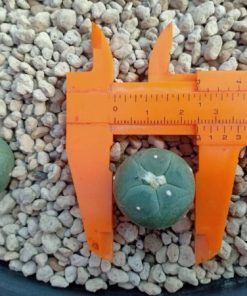
- Top-down shot with a scale reference (ruler or coin in frame). Reject listings using stock photos.
- Side profile showing the soil line. This is where you detect graft scars and root-neck taper.
- Root shot, or willingness to provide one. Ask. A confident seller will oblige.
- The actual plant you’ll receive, not “representative of stock.” For a locality specimen at this price point, insist on it.
Tier 3 — Morphological Cross-Check
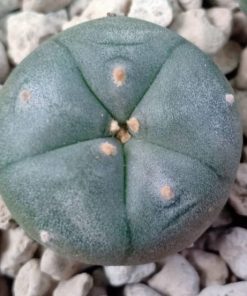
- Rib architecture: 8 ribs, symmetrical, crisply defined.
- Areole wool: dense, off-white to pale grey, with the characteristic slight asymmetry of naturally grown plants.
- Epidermis: matte, glaucous, blue-grey to grey-green. Glossy bright green suggests high-nitrogen forcing.
- Body profile: flattened to gently domed. A tall, columnar “etiolated” profile at 2.5–3 cm means insufficient light.
Own-Root vs. Grafted vs. De-Grafted: Which Should You Actually Buy?
| Factor | Own-Root, Seed-Grown | Grafted (on stock) | De-Grafted |
|---|---|---|---|
| True age at 2.5–3 cm | 4–8 years | 12–20 months | 1–3 years |
| Body density / hardness | High | Low to moderate | Moderate |
| Collector value | Highest | Lowest | Moderate |
| Flowering onset | Natural timing | Often accelerated | Variable |
| Long-term stability | Excellent | Depends on stock | Good once rooted |
| Typical price (2.5–3 cm) | Premium | Budget | Mid |
Our position: For a locality-tagged Cuatrociénegas plant specifically, buy own-root and seed-grown. The entire value proposition of a locality specimen rests on lineage integrity and authentic developmental history. Paying a provenance premium for a fast-forced graft defeats the purpose.
What Should You Pay? Realistic Price Benchmarks
Prices vary enormously by jurisdiction, seller type, and documentation quality. Treat these as orientation ranges, not quotes:
- Grafted or recently de-grafted, 2.5–3 cm, locality-tagged: low end of the market
- Own-root seed-grown, 2.5–3 cm, locality-tagged, no documentation: mid range
- Own-root seed-grown, 2.5–3 cm, with sowing date + seed source + photos of the actual plant: upper-mid range
- Own-root with verifiable field-number lineage and multi-year grower records: premium
The rule: documentation is worth roughly as much as the plant. A 2.5–3 cm specimen with a paper trail should cost noticeably more than an identical-looking plant without one — and it’s worth it, because the paper trail is the asset you’re actually acquiring.
The First 30 Days: Your Acclimation Protocol
More newly acquired Lophophora are lost in the first month than in the following five years. Here’s the sequence we use.
Days 1–3: Inspection and Quarantine
- Unbox immediately. Photograph the plant as received (for dispute protection).
- Quarantine physically — minimum 1 metre from your existing collection, ideally a separate room. Root mealybug travels.
- Inspect under magnification: areoles, rib furrows, root neck, and the base of the taproot.
- Do not water. Do not pot. Let it sit dry and shaded.
Days 4–7: Root Treatment
- If bare-rooted: rinse the roots in tepid water, trim any blackened or mushy tissue with a flame-sterilised blade, and let the wounds callus for 3–5 days in dry shade.
- If potted: consider bare-rooting anyway. You need to see what you bought, and unknown substrate is a liability.
- Optional: a brief soak in a broad-spectrum fungicide solution if any root damage is present.
Days 7–10: Potting
- Pot choice is critical. Lophophora has a napiform (carrot-shaped) taproot that can equal or exceed the body’s height. For a 2.5–3 cm plant, use a pot at least 9–10 cm deep, narrow rather than wide. Terracotta or vented plastic both work; terracotta dries faster.
- Substrate recipe (our standard mix):
- 35% pumice (3–6 mm)
- 25% crushed lava or zeolite
- 15% coarse quartz sand or grit
- 15% sieved, low-nutrient organic component (coir or mature compost)
- 10% crushed limestone or gypsum chips — this is the Cuatrociénegas-authentic touch and raises pH appropriately
- Plant so the root neck sits at or just below the grit line. Top-dress with 5–8 mm mineral grit.
Days 10–30: Reintroduction
- Wait 7–10 days after potting before the first water. Yes, really.
- First water: a full, thorough soak, then absolute dryness until the substrate is bone dry throughout.
- Light: start at roughly 40–50% of your target intensity and ramp up over three weeks. Shipping plants come from dark boxes; direct summer sun will scorch them.
- No fertiliser for the first 60 days.
Long-Term Cultivation: Growing a Cuatrociénegas Specimen Well
Light
Bright, but filtered during peak summer. In habitat these plants grow under nurse shrubs. Aim for full morning sun with afternoon shade, or 30–50% shade cloth in high-UV regions.
Reading the plant: a red, purple, or bronze flush across the epidermis is a sun-stress response. Some collectors like the look; it is nonetheless a stress signal. Pale, elongating, columnar growth means the opposite — increase light.
Water
Soak and dry, with conviction. Water thoroughly until it runs from the drainage holes, then wait until the substrate is completely dry — typically 10–21 days in active growth depending on climate, pot, and mix.
- Spring–autumn: active watering cycle
- Late autumn: taper off
- Winter: completely dry for 8–14 weeks
Temperature and Winter Rest
A genuine cold, dry dormancy at 5–12 °C (41–54 °F) does three things: it hardens the body, it sets flower buds for the following season, and it prevents the soft, etiolated winter growth that ruins body form.
Do not water during dormancy. A dry Lophophora tolerates brief dips near freezing far better than a damp one at 8 °C.
Feeding
Low and slow. A high-potassium, low-nitrogen cactus fertiliser at quarter strength, two or three times across the entire growing season. Over-feeding produces bloated, split-prone bodies with poor rib definition — the exact opposite of what a locality collector wants.
Repotting
Every 2–3 years, always at the start of the growing season. Check the taproot each time. As the plant approaches 4–5 cm, step up pot depth before pot width.
Pests and Problems: What Actually Goes Wrong
| Problem | Signs | Response |
|---|---|---|
| Root mealybug | White waxy deposits on roots, stalled growth | Bare-root, wash, treat, repot in fresh substrate. Quarantine. |
| Red spider mite | Fine rust-brown scarring at the apex, webbing | Raise humidity, apply appropriate miticide, isolate |
| Fungus gnats | Flying adults, larvae in topsoil | Mineral top-dressing, let mix dry fully, sticky traps |
| Basal rot | Soft, discoloured, foul-smelling base | Cut above damage, callus, re-root. Often fatal — prevention is everything. |
| Corking | Brown, bark-like tissue at base | Often natural ageing; if rapid and upward-spreading, investigate |
| Body splitting | Vertical fissures | Over-watering after drought, or over-feeding. Correct the regime. |
Legal, CITES, and Conservation: Read This Before You Buy
This guide is horticultural and conservation-focused. It does not address, endorse, or provide information about consumption, extraction, or preparation of any kind.
CITES
All Cactaceae are listed on CITES Appendix II, meaning international trade requires valid CITES export and import permits. Artificially propagated specimens are still covered, though simplified procedures may apply in some cases. A legitimate cross-border seller will discuss permits proactively. One who doesn’t is exposing you to seizure at customs.
Jurisdiction
Legal status varies dramatically by country and, within some countries, by state or province.
- In the United States, Lophophora williamsii is a federally controlled substance, including the living plant, with a narrow statutory exemption for bona fide religious use by the Native American Church.
- In several European countries — including the Netherlands and the Czech Republic — living ornamental plants are legally cultivated and traded.
- The United Kingdom permits the living plant while controlling preparations.
- Canada controls mescaline but specifically exempts peyote.
- Australia varies by state.
Verify your own jurisdiction’s current law before purchasing. This article is not legal advice, and legal status changes.
Conservation — The Part That Actually Matters
Lophophora williamsii is assessed as Vulnerable on the IUCN Red List, with populations declining due to over-harvesting, agricultural conversion, and mining pressure across its Chihuahuan Desert range.
The Cuatrociénegas basin is a federally protected natural area in Mexico. Wild collection there is illegal, and wild-collected material has no place in an ethical collection.
The only acceptable source is nursery-propagated, seed-grown material. Full stop.
Authoritative external references:
- IUCN Red List — Lophophora williamsii assessment — conservation status and population trend data
- CITES Appendices — official listing and permit requirements for Cactaceae
- Plants of the World Online, Royal Botanic Gardens Kew — accepted taxonomy and synonymy for Lophophora
Displaying a 2.5–3 cm Specimen in a Small Collection
The 2.5–3 cm class is made for constrained spaces.
- Grouping: Use uniform deep pots (7×7×10 cm) in a single tray. Visual coherence makes small plants look intentional rather than incidental.
- Labelling: Every pot gets locality, seed source, and sowing year. A collection without labels is just a group of plants.
- Companion locality plants: Lophophora from Viesca, Huizache, and El Amparo alongside Cuatrociénegas create an instructive comparative display. Add Ariocarpus fissuratus, Astrophytum asterias, or Turbinicarpus for a Chihuahuan Desert theme with matching cultural requirements.
- Records: Photograph each plant top-down on the same date annually. Over five years, this becomes the provenance documentation you pass on to the next owner.
Frequently Asked Questions
What does “l w variety coahuila cuatrocienegas 2 5 to 3cm diameter” actually mean?
It means a Lophophora williamsii (“L W”) whose seed lineage traces to the Cuatrociénegas locality in Coahuila, Mexico, currently measuring 2.5 to 3 centimetres across the body. “Variety” is used loosely in the trade — Cuatrociénegas is a locality designation, not a formally accepted botanical variety. You are buying documented geographic provenance, not a distinct taxon.
How old is a 2.5 to 3 cm Lophophora williamsii?
For own-root, seed-grown plants, typically 4 to 8 years, depending on growing conditions, feeding, and climate. Grafted plants can reach the same diameter in 12 to 20 months. Diameter alone is therefore an unreliable age indicator — you must establish whether the plant is own-root or grafted first.
Why is the Cuatrociénegas locality more desirable than generic Lophophora?
Three reasons: traceable provenance, distinctive phenotypic tendencies (flattened body, glaucous blue-grey epidermis, crisp rib definition, dense areole wool), and ex situ conservation value for a wild population in a protected and ecologically unique basin. Locality-tagged plants also hold their value far better in the collector market than untagged stock.
Can I grow a Cuatrociénegas Lophophora indoors on a windowsill?
Yes — provided you supply bright light (an unobstructed south-facing window in the northern hemisphere, or supplemental LED grow lighting), a fast-draining mineral substrate, a deep pot for the taproot, and a genuine cool, dry winter rest at 5–12 °C. Windowsill culture is entirely viable at the 2.5–3 cm size class; the main risks are insufficient light and over-watering.
When will a 2.5 to 3 cm Lophophora williamsii flower?
Most own-root plants produce their first flower between 3 and 4 cm, usually in the growing season following a proper cold, dry dormancy. A well-grown 2.5–3 cm specimen is therefore typically one to three seasons away from flowering — which is precisely why this size class is so appealing to collectors.
How do I tell if a Lophophora is grafted or own-root from photos?
Request a side profile at the soil line and a root photograph. Own-root plants show a smooth, tapering root neck leading into a carrot-like napiform taproot. De-grafted plants typically show a flat or concave base with a visible scar, an abrupt diameter change at the base, and shorter, more fibrous roots. Rib count helps too: 8 crisply resolved ribs at 2.5–3 cm suggests natural developmental pacing.
Is it legal to buy a Lophophora williamsii plant?
It depends entirely on your jurisdiction. The living plant is legally traded as an ornamental in several European countries, while it is a controlled substance in the United States. All cacti are also listed under CITES Appendix II, so international shipments require valid permits. Check your local law before purchasing — this article is horticultural information, not legal advice.
What substrate should I use for a Cuatrociénegas Lophophora?
A mineral-dominant, alkaline-leaning mix: roughly 70–85% inorganic components (pumice, crushed lava, zeolite, coarse grit) with 15–30% low-nutrient organic matter, plus crushed limestone or gypsum chips to reflect the calcareous substrates of the Cuatrociénegas basin. Top-dress with mineral grit to keep the root neck dry.
Conclusion: From Uncertain Buyer to Confident Curator
Here’s the transformation.
You arrived able to search for an l w variety coahuila cuatrocienegas 2 5 to 3cm diameter specimen. You leave able to evaluate one — to read rib architecture, detect a de-graft from a side profile, interrogate a seller’s documentation, estimate true age from diameter, and place the plant into a substrate and light regime that mirrors the gypsum hills it came from.
Be the first to review “L.W variety Coahuila Cuatrocienegas 2.5 to 3cm diameter” Cancel reply
Related products
Grafting plants
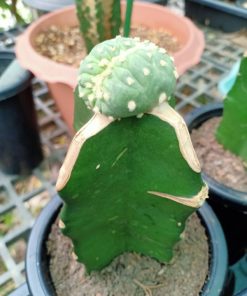
Lophophora vairety mini Fricii Cristata Grafted on Hylocereus


Lophophora Plants


Lophophora Plants

Lophophora Plants
Lophophora Plants

Lophophora Plants

Lophophora Plants
Reviews
There are no reviews yet.