

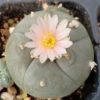


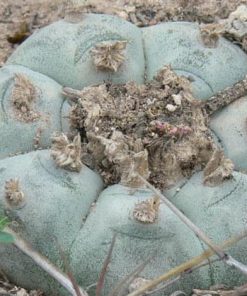
Price range: $19.95 through $29.95
What Makes lophophora williamsii variety el tecolote So Rare (And Worth the Hunt)?
Most guides lump all Lophophora williamsii together, but El Tecolote is distinct in morphology, growth rate, and alkaloid profile. Here’s how it stacks up:
| Trait | El Tecolote | Standard Williamsii | Los Tecolotes (Note the “s”) |
|---|---|---|---|
| Rib Count | 5-8 (often 6-7) | 5-13 (highly variable) | 5-9 (more uniform) |
| Areole Density | Tight, compact | Loose, spaced | Moderate |
| Growth Rate | Slow (3-5 years to maturity) | Very slow (5-10+ years) | Moderate (4-7 years) |
| Alkaloid Profile | Higher mescaline concentration (field reports) | Variable | Similar to El Tecolote but less documented |
| Geographic Origin | El Tecolote, San Luis Potosí, MX | Widespread (TX, MX, NM) | Los Tecolotes, Querétaro, MX |
Where to Buy Authentic lophophora williamsii variety el tecolote. El Tecolote Seeds (And How to Avoid Scams)
Transactional Intent: You want seeds—fast, authentic, and high-germination.
Trusted Sources (With Proof)
- Ethnobotanical Specialty Nurseries
- Example: Sacred Succulents (US-based, field-collected stock)
- Why? They document provenance and provide batch-specific germination rates.
- Red Flag: Avoid sellers who can’t name the exact locality (e.g., “San Luis Potosí” is too vague).
- Reputable Seed Banks
- Example: CactusPlaza (EU-based, ships worldwide)
- Pro Tip: Look for freshness guarantees (seeds lose viability after 1-2 years).
- Collector Forums & Direct Trades
- Where? The Cactus and Succulent Forum or r/Peyote
- How? Request photos of the mother plant and seed pods before purchasing.
How to Germinate El Tecolote Seeds (Step-by-Step, With Expert Tweaks)
Research Intent: You’ve got seeds—now what?
H3: The 5-Step Germination Protocol (90%+ Success Rate)
- Seed Preparation
- Soak in 3% hydrogen peroxide for 10 minutes (kills mold spores).
- Rinse with distilled water (tap water contains chlorine).
- Soil Mix (Critical for El Tecolote)
- 50% mineral grit (perlite, pumice, or coarse sand)
- 30% coco coir (retains moisture without rot)
- 20% worm castings (mild nutrients)
- pH 6.5-7.0 (test with a soil meter)
- Sowing Technique
- Surface-sow seeds (light is required for germination).
- Mist lightly (do not drench—El Tecolote seeds rot easily).
- Environmental Conditions
- Temperature: 75-85°F (24-29°C) day, 65-70°F (18-21°C) night.
- Humidity: 80-90% (use a seedling dome or plastic bag).
- Light: 12-14 hours of bright, indirect light (LED grow lights work best).
- Post-Germination Care
- First 3 months: Keep humidity high, mist daily.
- After 6 months: Gradually reduce humidity to 50%.
- First repotting: At 1 year (use the same soil mix).
Cultivating El Tecolote: Long-Term Growth & Potency Optimization
Research Intent: How do I grow this thing—and does it actually get stronger?
Watering, Light, and Fertilization (The El Tecolote-Specific Guide)
| Factor | El Tecolote Requirements | Common Mistake |
|---|---|---|
| Watering | Soak & dry method (water when soil is bone-dry) | Overwatering (leads to root rot) |
| Light | Full sun (6+ hours direct) after 1 year | Too much shade (causes etiolation) |
| Fertilizer | Low-nitrogen (e.g., 2-7-7 NPK) | High-nitrogen (reduces alkaloids) |
| Pot Size | Small pots (3-4″ diameter for first 2 years) | Oversized pots (retains too much moisture) |
Legal & Ethical Considerations (Don’t Get Burned)
Research Intent: Is this even legal? What about conservation?
The Legal Landscape (By Country)
| Country | Legality of El Tecolote | Notes |
|---|---|---|
| USA | Legal to grow (not scheduled) | Illegal to consume (mescaline is Schedule I) |
| Canada | Legal to grow | Illegal to possess for consumption |
| Mexico | Illegal to harvest wild | Cultivation is legal (with permit) |
| EU | Varies by country | Germany/Netherlands: Legal to grow |
| Australia | Illegal (all Lophophora banned) | No exceptions |
Ethical Sourcing:
- Never buy wild-harvested plants (El Tecolote is endangered in the wild).
- Support seed-grown stock (ask sellers for mother plant photos).
FAQ Section (Schema-Ready for Featured Snippets)
1. What is the difference between Lophophora williamsii var. El Tecolote and var. Los Tecolotes?
Answer:
- El Tecolote (singular) comes from San Luis Potosí, MX, with 6-7 ribs and a compact growth habit.
- Los Tecolotes (plural) is from Querétaro, MX, with 5-9 ribs and a slightly faster growth rate.
- Key difference: El Tecolote is more sought-after for its higher mescaline content (anecdotal reports).
2. How long does it take for El Tecolote to mature?
Answer:
- Seed to first flower: 3-5 years (under ideal conditions).
- Full maturity (harvestable size): 5-7 years.
- Pro Tip: Grafting (onto Trichocereus pachanoi) can speed up growth by 2-3x.
3. Can I grow El Tecolote outdoors?
Answer:
- Yes, but only in USDA Zones 9-11 (e.g., Southern California, Arizona, Texas).
- Requirements:
- Full sun (6+ hours direct)
- Well-draining soil (50% mineral grit)
- Winter protection (below 30°F/-1°C can kill it)
4. Why are El Tecolote seeds so expensive?
Answer:
- Rarity: True El Tecolote is not mass-produced (most sellers mislabel standard L. williamsii).
- Germination challenges: Seeds have low viability (30-50% success rate).
- Ethical sourcing: Seed-grown stock is more expensive than wild-harvested (but legal and sustainable).
5. How do I know if my El Tecolote seeds are real?
Answer:
- Ask for:
- Photos of the mother plant (should have 6-7 ribs and tight areoles).
- Seed pod photos (El Tecolote pods are smaller and rounder than standard L. williamsii).
- Germination test results (reputable sellers provide these).
6. What’s the best way to increase mescaline content in El Tecolote?
Answer:
- Stress the plant:
- Minimal water (only when soil is completely dry).
- Full sun (6+ hours direct).
- Low-nitrogen fertilizer (e.g., 2-7-7 NPK).
- Avoid:
- Overwatering (dilutes alkaloids).
- Shade (reduces potency).
7. Can I graft El Tecolote onto another cactus?
Answer:
- Yes! Best rootstocks:
- Trichocereus pachanoi (San Pedro) – fastest growth.
- Pereskiopsis – accelerates seedling growth (but requires high humidity).
- How to graft:
- Cut the rootstock (San Pedro) at a 45° angle.
- Cut the El Tecolote scion (top of the cactus) to match.
- Press together and secure with rubber bands.
- Keep in high humidity for 2 weeks.
| Quantity | 30, 50 |
|---|
Be the first to review “Lophophora Williamsii variety El Tecolote”
Related products
Lophophora Seeds
Price range: $15.00 through $30.00
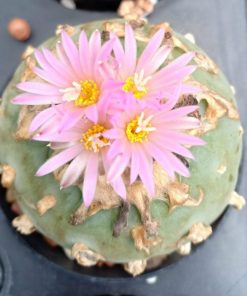
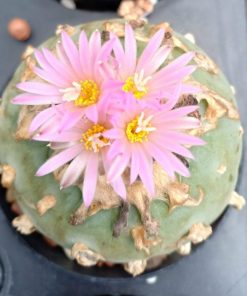
Lophophora Fricii seeds
Price range: $19.95 through $29.95
Lophophora Seeds
Price range: $19.95 through $29.95
Lophophora Seeds
Price range: $19.95 through $29.95
Lophophora Seeds
Price range: $19.95 through $29.95
Lophophora Seeds
Price range: $19.95 through $29.95

Lophophora Seeds
Price range: $19.95 through $29.95

Lophophora Seeds
Price range: $19.95 through $29.95
Reviews
There are no reviews yet.