
Jul
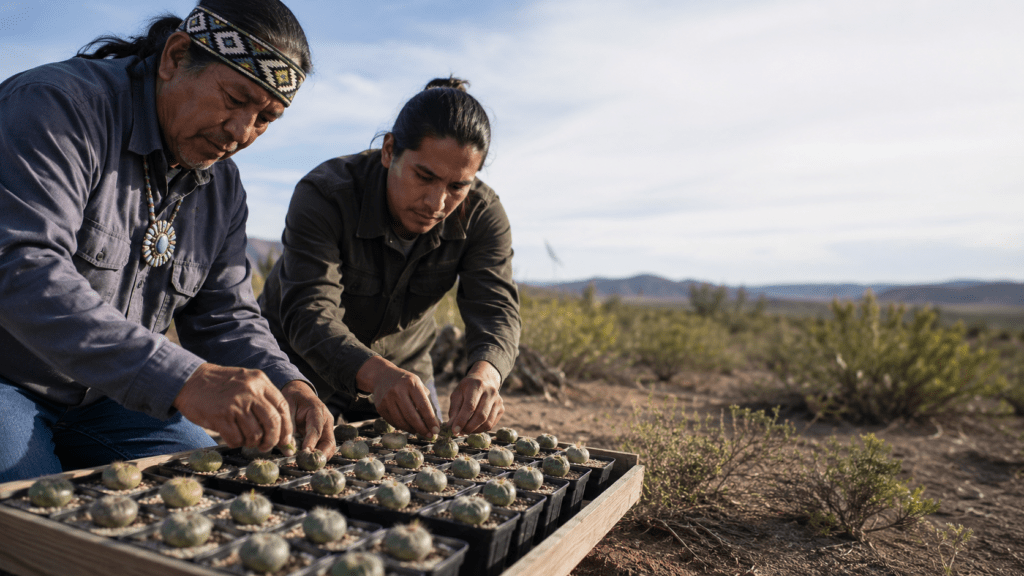
We will break down the exact frameworks required for ethical peyote cultivation, from sourcing seeds without harming wild populations to mastering the slow, deliberate art of growing Lophophora williamsii.
In our experience working alongside conservationists and botanical experts, the difference between a harmful hobbyist and an ethical steward comes down to education.
Let’s dive into the definitive blueprint for cultivating peyote with ethics and cultural respect.
Why Cultivating Peyote with Ethics and Cultural Respect Matters Now
To understand the plant, you must first understand the crisis surrounding it.
Peyote (Lophophora williamsii) is a small, slow-growing, spineless cactus native to the Tamaulipan thornscrub of South Texas and Northern Mexico.
For thousands of years, it has been the spiritual center for numerous Indigenous tribes.
Today, this sacred medicine is facing an existential threat.
The Ecological Crisis: Wild Peyote on the Brink
Wild peyote populations are rapidly disappearing.
Agricultural development, cattle grazing, wind farm construction, and illegal poaching have decimated its natural habitat.
When untrained individuals harvest wild peyote, they often cut the root too deeply.
This prevents the plant from regenerating, effectively killing a cactus that may have taken decades to mature.
The Cultural Impact: Indigenous Sovereignty at Stake
For the Native American Church (NAC) and other Indigenous groups, peyote is not a recreational substance; it is a vital sacrament.
It is their medicine, their teacher, and their direct connection to the divine.
When outsiders commodify the plant or deplete wild supplies, it directly threatens Indigenous religious freedom and cultural survival.
Cultivating Peyote with Ethics and Cultural Respect means recognizing that your desire to grow the plant must never supersede Indigenous rights to access it.
The Legal Landscape of Peyote Cultivation
Before you even touch a seed, you must understand the legal parameters governing this plant.
Ethical cultivation requires strict adherence to the law to avoid contributing to black-market poaching.
Federal vs. State Laws (United States)
In the United States, peyote is classified as a Schedule I controlled substance under federal law.
However, the American Indian Religious Freedom Act (AIRFA) Amendments of 1994 provide a specific exemption.
This exemption legally protects the use, possession, and transportation of peyote by enrolled members of federally recognized tribes for traditional, ceremonial purposes.
For non-Native individuals, cultivating peyote remains federally illegal, though some local municipalities have passed “decriminalization” resolutions for entheogenic plants.
International Regulations and CITES
Globally, peyote is protected under Appendix II of CITES (Convention on International Trade in Endangered Species of Wild Fauna and Flora).
This means international trade of the plant, its seeds, or its parts is strictly regulated to prevent exploitation.
Core Principles of Ethical Peyote Cultivation
If you reside in a jurisdiction where cultivation is legally permitted, or if you are researching from an educational or conservationist standpoint, you must adopt these core tenets.
Principle 1: Absolute Zero Wild-Harvesting
We cannot stress this enough.
Ethical growers operate on a closed-loop system.
They rely entirely on cultivated seeds and never take from the wild.
If you see an adult peyote plant for sale online, be highly suspicious.
Mature plants sold on the internet are frequently poached from the wild.
Principle 2: Verified Seed Sourcing
You must trace the lineage of your seeds.
Purchase seeds only from verified, domestic, ethical nurseries that clearly state their seeds are nursery-grown.
Principle 3: Cultural Deference
True respect means de-centering yourself.
Acknowledge the history of the land and the plant.
Support Indigenous-led conservation efforts, such as the Indigenous Peyote Conservation Initiative (IPCI), rather than starting competing, non-Native conservation projects.
The Practical Guide to Peyote Cultivation
If you have secured legally and ethically sourced seeds, you are ready to begin the botanical journey.
Peyote cultivation is an exercise in extreme patience.
These plants can take 10 to 15 years to reach maturity.
Preparing the Right Environment
Peyote thrives in harsh, arid conditions.
To replicate its natural habitat, you need a highly controlled micro-climate.
They require warmth, specific light cycles, and intense drainage to survive in captivity.
Soil Composition for Slow Growth
Forget traditional potting soil.
Standard organic soils hold too much moisture and will cause fatal root rot in Lophophora species.
Your soil mix must be heavily inorganic.
- Pumice (40%): Provides excellent drainage and aeration.
- Crushed Limestone (20%): Mimics the calcium-rich soils of South Texas.
- Coarse Sand or Gravel (20%): Prevents soil compaction.
- Organic Earthworm Castings or Sifted Compost (20%): Provides just enough nutrients for slow growth.
Lighting Requirements
While wild peyote grows in the desert, it usually grows under the protective shade of larger nurse plants (like mesquite shrubs).
Direct, blazing sun will scorch and kill a cultivated peyote cactus.
- Seedlings: Require bright, indirect light or filtered shade.
- Mature Plants: Thrive in partial shade with gentle morning sunlight.
- Artificial Light: If using LED grow lights, keep the intensity low (around 10,000 to 15,000 lux) to prevent light stress.
Watch for red or purple discoloration on the skin; this is a clear sign of severe light stress.
The Art of Watering
Overwatering is the number one killer of cultivated peyote.
In their natural habitat, they survive long droughts and only drink during rare, intense flash floods.
During the active growing season (Spring and Summer), water deeply only when the soil is 100% dry.
During winter dormancy, stop watering completely.
The plant will shrink and look deflated during winter; this is completely normal and necessary for its survival.
Step-by-Step Seed Germination
Growing from seed is the most ethical path, but it requires precision.
Follow this blueprint to maximize your germination rates without risking fungal outbreaks.
Step 1: The Humidity Dome
Peyote seeds need high humidity and warmth to germinate.
Use a clean plastic takeaway container with a clear lid.
Fill it with your sterilized, moistened soil mix.
Step 2: Surface Sowing
Do not bury the seeds.
Place them gently on the surface of the soil.
They require light to trigger the germination process.
Step 3: Temperature Control
Keep the sealed container in a warm spot, ideally between 75°F and 85°F (24°C – 29°C).
Use a seedling heat mat if your environment is too cold.
Step 4: The Waiting Game
Germination can take anywhere from 7 to 21 days.
Keep the container sealed to maintain 100% humidity.
Once the tiny green globes appear, you will keep them in this humid environment for up to six months before slowly acclimating them to drier air.
Grafting: The Ethical Debate
Grafting is the process of attaching a slow-growing peyote seedling to a fast-growing columnar cactus (like San Pedro or Pereskiopsis).
This allows the peyote to grow at a tremendously accelerated rate.
A grafted peyote can reach flowering maturity in 2 years instead of 10.
The Pros of Grafting
From a conservation standpoint, grafting is highly beneficial.
It allows ethical growers to produce seeds rapidly.
These seeds can then be shared, reducing the overall demand for wild-harvested plants.
The Cons and Cultural Considerations
However, grafting changes the chemical composition and the spiritual essence of the plant.
Many Indigenous practitioners do not view grafted peyote as suitable for traditional ceremonial use.
If you are cultivating peyote with ethics and cultural respect, you must understand this distinction.
Grafting is an excellent tool for botanical preservation and seed generation, but it should not be conflated with cultivating traditional medicine.
Pest Management the Ethical Way
When you bring the desert into your home or greenhouse, pests will inevitably follow.
Because peyote is a sensitive plant, harsh chemical pesticides can do more harm than good.
Furthermore, ethical cultivation demands ecological responsibility, even in pest control.
Spider Mites
These microscopic pests thrive in hot, dry environments.
They will scar the skin of your cactus, turning it a rusty brown color.
The Remedy: Use a gentle spray of diluted neem oil applied at dusk.
Never apply neem oil during daylight, as the sun will literally fry the oiled skin of the cactus.
Root Mealybugs
These are the silent killers of the Lophophora world.
They hide below the soil, sucking the life from the taproot.
The Remedy: Regularly inspect the roots during repotting.
If found, treat the roots with a soak in a solution of warm water and mild castile soap, followed by a dusting of diatomaceous earth.
Beyond the Garden: Supporting Indigenous Conservation
Your responsibility does not end at the rim of your flower pot.
True ethical cultivation means actively working to protect the plant in its native habitat.
You cannot claim to love the plant if you do not support the people who have stewarded it for millennia.
Donating to Indigenous-Led Coalitions
There are powerful organizations fighting to buy back native peyote habitats and secure them for future generations.
The Indigenous Peyote Conservation Initiative (IPCI) is a prime example of an organization doing critical, on-the-ground work.
They focus on land access, ecological restoration, and cultural preservation.
Consider setting aside a portion of your gardening budget to donate to these causes.
Advocating for Habitat Protection
The Tamaulipan thornscrub is one of the most endangered ecosystems in North America.
Root plowing for cattle ranches and the rapid expansion of energy infrastructure are destroying thousands of acres of wild peyote every year.
Support environmental policies and organizations that protect South Texas biodiversity.
External Authority Reference: For more on the ecological importance of this region, consult research from the Botanical Research Institute of Texas (BRIT).
The Role of Education in Conservation
As you master the art of cultivating peyote with ethics and cultural respect, you become a steward of information.
The black market thrives on ignorance.
When people do not know how endangered wild peyote is, they unwittingly buy poached plants.
Sharing Knowledge Safely
Share your knowledge of ethical seed sourcing and proper soil dynamics with other botany enthusiasts.
However, be incredibly cautious about sharing geolocation data of wild plants if you ever visit native habitats.
Posting photos of wild peyote with geotags on social media provides a treasure map directly to poachers.
Always strip metadata from your photos and keep wild locations fiercely protected.
Understanding the Anatomy of Lophophora williamsii
To truly care for this plant, you must understand how its unique anatomy dictates its survival.
Peyote is geophytic, meaning a significant portion of the plant exists underground.
The Taproot
The most vital part of the peyote cactus is its massive, subterranean taproot.
In the wild, this taproot anchors the plant and stores immense amounts of water and nutrients.
When cultivating, you must use deep pots to accommodate this taproot.
Shallow pots will stunt the plant’s growth and lead to poor health.
The Crown and Tubercles
The visible part of the plant is called the crown, which is divided into ribs and tubercles.
Instead of spines, peyote produces small, fuzzy tufts of hair called trichomes (or areoles).
These hairs help the plant collect morning dew in the arid desert.
When watering from above, try not to soak the fuzzy tufts, as trapped water can invite fungal rot.
The Seasonal Lifecycle of Cultivated Peyote
Understanding the rhythm of the plant is essential for ethical cultivation.
You must sync your care routine with the natural seasons.
Spring: The Awakening
As temperatures rise and daylight increases, the cactus breaks dormancy.
This is the time to give your first light watering of the year.
It is also the optimal time for repotting, allowing roots to heal before the heavy growing season.
Summer: Growth and Flowering
With consistent heat, healthy peyote will begin to grow and push out beautiful, pale pink flowers.
These flowers are self-fertile.
Once pollinated, they will eventually produce small, pink fruit pods containing black seeds.
Harvest these seeds ethically to continue your closed-loop cultivation.
Autumn: Winding Down
As days shorten, the plant prepares for its tough winter rest.
Begin tapering off your watering schedule significantly.
The soil must be bone dry before the cold weather sets in.
Winter: Deep Dormancy
During winter, the cactus essentially hibernates.
It will shrink, soften, and pull itself lower into the soil to protect against frost.
Do not panic. Do not water it. Let it sleep.
Advanced Conservation: Creating a Seed Bank
For the elite ethical grower, the ultimate goal is not consumption, but preservation.
By creating a localized seed bank, you contribute to a decentralized conservation effort.
Harvesting Seeds
When the pink fruit pods dry out and turn brown, they are ready to harvest.
Gently pluck the pod using tweezers.
Carefully break it open and separate the small black seeds from the dried fruit matter.
Storing Seeds for Longevity
Peyote seeds can remain viable for several years if stored correctly.
Keep them in a cool, dark, and dry place.
Paper envelopes stored inside a glass mason jar with a desiccant packet provide the perfect storage environment.
By sharing these ethically cultivated seeds with other responsible growers, you directly undercut the black market for poached plants.
Frequently Asked Questions
What does cultivating peyote with ethics and cultural respect actually mean?
It means growing the plant exclusively from legally and ethically sourced seeds, refusing to buy wild-harvested plants, and ensuring your cultivation practices do not infringe upon or disrespect Indigenous rights and conservation efforts.
How can I tell if a peyote plant online is poached?
If a seller is offering large, mature, heavily scarred plants with massive taproots for a cheap price, it is almost certainly poached. Ethical, nursery-grown plants are usually smaller, unblemished, and significantly more expensive due to the years of care required.
Why is peyote endangered in the wild?
Wild populations are declining rapidly due to habitat destruction (agriculture, cattle ranching, wind farms) and aggressive over-harvesting by illegal poachers and untrained individuals.
When is the best time to plant peyote seeds?
The best time to sow seeds is in the late spring or early summer when ambient temperatures naturally hover between 75°F and 85°F. However, with a heat mat and a humidity dome, you can successfully germinate seeds year-round indoors.
Can I legally grow peyote in the United States?
Under federal law, peyote is a Schedule I substance, and cultivation is illegal for non-Native individuals. Some specific cities and counties have passed decriminalization measures, but federal law still applies. Always consult local legal counsel before attempting to cultivate.
How often should I water my peyote cactus?
During the hot summer growing season, water deeply only when the soil is completely dry (roughly every 2-3 weeks depending on your climate). During the winter dormancy period (November through March), you should not water the plant at all.
Conclusion & Next Steps
Cultivating peyote is not just a botanical exercise; it is a profound responsibility.
The survival of Lophophora williamsii in the wild hangs by a thread, threatened by habitat loss and human greed.
By choosing to engage with this plant ethically, you are drawing a line in the sand.
You now possess the blueprint for cultivating peyote with ethics and cultural respect.
