
Blog
Why Sustainable Peyote Trade Matters
Jul
Why Sustainable Peyote Trade Matters—And What Ethical Support Really Looks Like
You are right to care about peyote.
Here is the promise: this guide will help you understand why sustainable peyote trade matters, what ethical sourcing actually requires, and what responsible supporters should do next.
Why Sustainable Peyote Trade Matters Right Now
Why Sustainable Peyote Trade Matters is not a niche question. It sits at the intersection of conservation, Indigenous religious freedom, drug policy, biodiversity, and ethical sourcing.
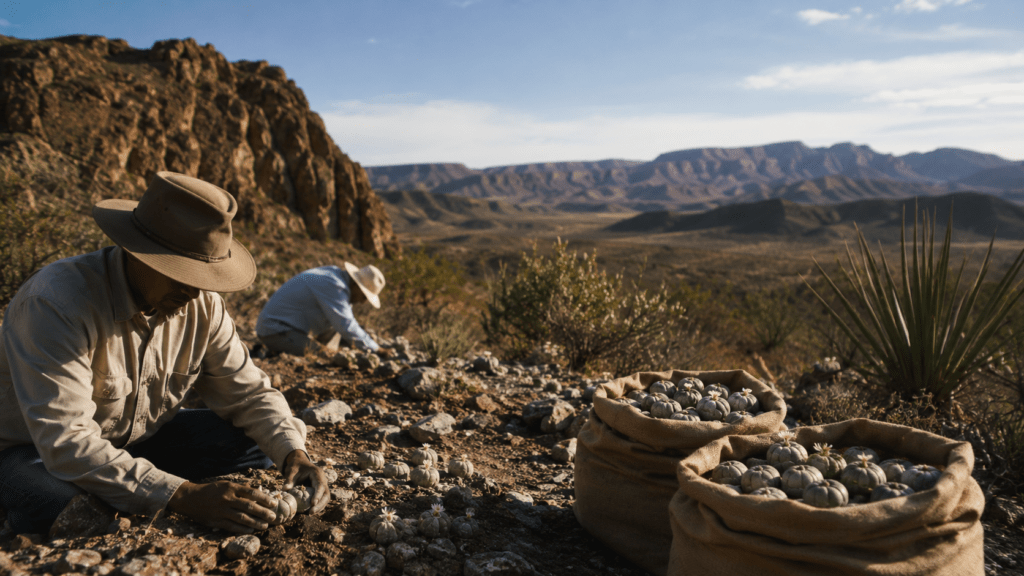
Peyote, scientifically known as Lophophora williamsii, is a small, spineless cactus native primarily to parts of northern Mexico and South Texas. It grows slowly. It can take many years to reach maturity. Its habitat is limited. And demand has increased from multiple directions.
That combination creates a serious sustainability problem.
The pressure comes from:
- Habitat loss from land development, agriculture, oil and gas activity, and brush clearing.
- Overharvesting in traditional peyote-growing areas.
- Illegal poaching and black-market demand.
- Commercialization of “psychedelic wellness” without Indigenous consent.
- Misinformation online that treats peyote as a trendy product rather than a sacred and ecologically vulnerable plant.
In our experience reviewing ethical sourcing conversations across plant medicine, conservation, and sustainability sectors, peyote stands apart because the stakes are not only ecological.
They are cultural.
They are legal.
They are spiritual.
They are historical.
A truly sustainable peyote trade cannot be measured only by whether a plant regrows after harvest. It must also ask: Who controls access? Who benefits? Who is harmed? Who gets erased?
Peyote Is Not Just a Product
The biggest weakness in many online discussions about peyote is that they flatten it into one category: a psychoactive plant.
That framing is incomplete and often harmful.
Peyote is better understood through three overlapping lenses:
- A living desert species
- A sacred Indigenous sacrament
- A legally restricted plant in many jurisdictions
Miss one of those lenses and your ethical framework collapses.
Peyote as a Living Desert Species
Peyote grows in harsh desert and semi-desert ecosystems. It is adapted to dry conditions, intense heat, poor soils, and long growth cycles.
That does not mean it is indestructible.
Slow-growing plants are especially vulnerable to unsustainable harvest. When mature plants are removed faster than they regenerate, populations decline. When habitat is fragmented or destroyed, recovery becomes even harder.
Peyote’s limited range also makes conservation more urgent. A species with a narrow habitat cannot simply “move elsewhere” when land is cleared or climate pressures intensify.
Peyote as a Sacred Indigenous Sacrament
For many Indigenous communities, especially members of the Native American Church, peyote is not a recreational substance. It is a sacrament used in ceremonial, religious, healing, and community contexts.
That matters.
Any conversation about sustainable peyote trade must center Indigenous rights, Indigenous leadership, and Indigenous access. Otherwise, sustainability becomes another form of extraction dressed in green language.
Ethical peyote policy must ask:
- Are Indigenous communities leading the conversation?
- Are ceremonial users protected?
- Is traditional access being preserved?
- Are outside buyers increasing scarcity?
- Are profits flowing away from the communities most connected to peyote?
A market that protects the plant but sidelines Indigenous people is not sustainable. It is just conservation without justice.
Peyote as a Legally Restricted Plant
Peyote is legally restricted in many places, including the United States, where mescaline is listed as a Schedule I controlled substance under federal law. There are specific legal protections and exemptions related to Indigenous religious use, but these rules are narrow and jurisdiction-dependent.
For legal context, see the U.S. Drug Enforcement Administration’s controlled substances resources:
External source: DEA Diversion Control Division – Controlled Substance Schedules
International trade in cacti may also involve conservation controls. The U.S. Fish & Wildlife Service provides information on CITES and international wildlife and plant trade requirements:
External source: U.S. Fish & Wildlife Service – CITES
This is not legal advice. It is a clear warning: do not buy, sell, transport, harvest, or import peyote unless you are legally authorized to do so.
Key Takeaway:
Peyote sustainability is not only about supply. It is about legality, Indigenous sovereignty, habitat protection, and reducing harmful demand.
What “Sustainable Peyote Trade” Actually Means
A sustainable peyote trade is not simply a trade where someone claims, “We harvest responsibly.”
That is not enough.
A genuine model should include six non-negotiable pillars.
1. Indigenous Leadership and Consent
The first question should not be, “Can this be sold?”
The first question should be, “Who has the moral, cultural, and historical authority to guide this?”
For peyote, Indigenous communities with long-standing ceremonial relationships to the plant must be central. That includes Native American Church leaders, elders, conservation advocates, and Indigenous-led organizations.
Sustainability without consent becomes extraction.
Ethical trade must respect:
- Indigenous religious freedom
- Ceremonial access
- Traditional ecological knowledge
- Community governance
- Benefit-sharing
- Cultural boundaries
If a company, retreat center, online seller, or “plant medicine brand” talks about peyote without mentioning Indigenous rights, that is a major red flag.
2. Legal Compliance
A sustainable peyote trade cannot be built on illegal sourcing.
Period.
Legal compliance matters because illegal markets reward secrecy, poaching, habitat trespass, and unsafe transportation. They also make conservation monitoring nearly impossible.
Any legitimate system must operate within applicable tribal, federal, state, and international law.
This includes laws related to:
- Controlled substances
- Religious exemptions
- Plant conservation
- Land access
- Harvest licensing
- Transport and distribution
- International trade restrictions
3. Habitat Protection
There is no sustainable peyote trade without protected habitat.
You cannot harvest your way out of habitat destruction.
Peyote depends on specific desert ecosystems. When land is cleared, fragmented, paved, drilled, or degraded, the plant loses the foundation it needs to survive.
Habitat protection may include:
- Conservation easements
- Indigenous-led land stewardship
- Private landowner agreements
- Anti-poaching monitoring
- Restoration of native plant communities
- Reduced disturbance in peyote-growing areas
- Long-term ecological surveys
For broader native plant and habitat context in Texas, Texas Parks & Wildlife is a useful public resource:
External source: Texas Parks & Wildlife Department
4. Regenerative Harvest Standards
Where harvesting is lawful and culturally appropriate, harvest methods matter.
A poor harvest can kill the plant. A better-managed harvest may allow regrowth under the right conditions. But even “careful harvest” is not automatically sustainable if too many plants are taken, immature plants are removed, or habitat conditions are declining.
A responsible model should account for:
- Plant maturity
- Harvest frequency
- Population density
- Regrowth monitoring
- Seasonal conditions
- Landowner permission
- Cultural protocols
- Ecological limits
The point is not to publish a harvesting manual. The point is to recognize that harvest must be governed, measured, and restrained.
Pitfall Alert:
“Wild-harvested” is not always a premium feature. With peyote, wild-harvested material can be a warning sign if there is no transparent legal, ecological, and Indigenous-led framework behind it.
5. Traceability and Accountability
Ethical sourcing requires proof.
A sustainable peyote trade should be able to answer basic questions:
- Where did the peyote come from?
- Was it harvested legally?
- Who authorized it?
- Was the landowner involved?
- Were Indigenous stakeholders involved?
- Was the population monitored?
- Were harvest limits followed?
- Who received the economic benefit?
If the answer is vague, romantic, or evasive, assume the sourcing is weak.
Traceability is not bureaucracy. It is protection.
6. Demand Reduction
This is the pillar many sellers do not want to discuss.
Sometimes the most ethical choice is not “better peyote.”
Sometimes the most ethical choice is less demand for peyote.
If non-Indigenous psychedelic tourism, online buyers, collectors, or wellness consumers increase demand, they may worsen scarcity for Indigenous ceremonial communities.
That is why sustainable peyote trade must include restraint.
Responsible supporters should be willing to say:
- Not every interested person should seek peyote.
- Not every sacred tradition should be commercialized.
- Not every plant should become a wellness product.
- Not every market should grow.
Key Takeaway:
Sustainable peyote trade requires Indigenous leadership, legal compliance, habitat protection, regenerative standards, traceability, and demand restraint.
How Unsustainable Peyote Trade Causes Damage
Unsustainable peyote trade harms more than one thing at a time.
It damages the plant. It damages the land. It damages Indigenous access. It damages public trust. And it fuels the false idea that sacred plants exist for consumer convenience.
Overharvesting Shrinks Future Supply
When harvest exceeds natural regrowth, supply declines.
That can lead to smaller available plants, longer travel distances, higher costs, and more pressure on remaining populations. In a slow-growing species, these effects can compound over years.
This is especially concerning when harvesters take immature plants or remove plants in ways that reduce regrowth potential.
Habitat Loss Multiplies the Problem
Even if every harvest were careful, habitat loss would still threaten peyote.
Land conversion can destroy populations outright. Roads can fragment habitat. Development can increase access for poachers. Industrial activity can alter drainage, soil stability, and plant communities.
Sustainability must therefore include land protection, not just harvest rules.
Illegal Trade Rewards the Worst Actors
Black markets are not designed for conservation.
They reward people who can obtain supply quickly and quietly. That often means trespass, poaching, mislabeling, and moving plants through informal channels.
Illegal trade also makes it harder for Indigenous communities and conservationists to document what is happening on the ground.
Commercial Hype Increases Demand
The broader psychedelic renaissance has created renewed interest in psychoactive plants. Some of that interest is sincere. Some of it is reckless.
When peyote is marketed as an exotic experience, a luxury retreat offering, or an edgy collectible, demand can grow outside the communities with traditional relationships to the plant.
That can intensify scarcity.
Cultural Harm Is Real Harm
Unsustainable trade does not only remove plants from land.
It can remove meaning from culture.
When sacred peyote traditions are copied, packaged, or sold to outsiders, Indigenous communities may experience misrepresentation, disrespect, and spiritual exploitation.
Cultural sustainability means protecting context, not just biomass.
The Ethical Buyer’s Framework: What Responsible People Should Do
This section matters because search intent for this topic is often mixed.
Some readers are researching conservation. Some are policy watchers. Some are horticulture or ethnobotany readers. Some may be buyers trying to understand what is ethical.
So let’s be direct.
If you are not legally authorized to possess or use peyote, do not buy peyote.
That includes online purchases, social media offers, “ceremonial” packages, imported products, wild-collected plants, and sellers who avoid legal questions.
Ethical interest does not override law, conservation, or Indigenous sovereignty.
Ask These Questions Before Supporting Any Peyote-Related Source
Use this checklist to evaluate claims.
1. Am I legally authorized?
If the answer is no, stop.
Do not buy, transport, import, collect, or possess peyote.
2. Is Indigenous leadership visible?
Look for real governance, not decorative language.
Strong signs include:
- Indigenous-led organizations
- Native American Church involvement
- Community consent
- Benefit-sharing
- Clear cultural boundaries
- Public conservation commitments
Weak signs include:
- Vague “shamanic” branding
- Borrowed Indigenous aesthetics
- No named community accountability
- Claims of secret permission
- Romanticized marketing
3. Is the source transparent?
Ethical operators can explain where material comes from, what permissions exist, what laws apply, and how conservation is handled.
If a seller says, “Don’t worry about it,” worry about it.
4. Does the model reduce pressure on wild populations?
Sustainability must reduce ecological harm.
Look for support for:
- Habitat conservation
- Population monitoring
- Restoration
- Lawful propagation research
- Indigenous ceremonial access
- Anti-poaching work
5. Who benefits financially?
If outsiders profit while Indigenous communities lose access, the model is not ethical.
Follow the money.
6. Does the language respect limits?
Responsible sources do not promise unlimited access. They acknowledge scarcity, law, and cultural boundaries.
Expert Corner:
A credible ethical sourcing claim usually includes what the source will not do. Boundaries are a sign of seriousness.
Red Flags in Peyote Marketing
Many current online resources fail because they do not teach readers how to detect bad actors.
Here are the warning signs.
Red Flag 1: “Rare Wild-Harvested Peyote for Sale”
This phrase should immediately raise concern.
Wild-harvested peyote may be illegal, unsustainable, or taken from sensitive habitat. Without transparent legal authorization and conservation oversight, it is not ethical.
Red Flag 2: “Ancient Shamanic Peyote Ceremony—Book Now”
Be careful with retreat marketing that commercializes Indigenous ceremony for outsiders.
Ask:
- Who leads it?
- What community authorizes it?
- Is it legal?
- Are Indigenous people benefiting?
- Is peyote conservation supported?
- Are cultural protocols respected?
If the answers are vague, walk away.
Red Flag 3: “Discreet Shipping”
Discreet shipping language often signals legal risk.
Ethical conservation does not need secrecy.
Red Flag 4: “Sustainably Sourced” With No Proof
Anyone can write “sustainable” on a webpage.
Proof requires specifics.
Look for documentation, partnerships, legal frameworks, conservation methods, and named accountability.
Red Flag 5: “Peyote Alternative” Claims That Still Drive Extraction
Some sellers use confusing language to dodge legal or ethical scrutiny.
If the product still creates demand for wild peyote, ceremonial appropriation, or endangered desert plants, the sustainability problem remains.
What a Truly Sustainable Peyote Trade Could Look Like
A sustainable peyote future is possible, but it will not be built by hype-driven markets.
It will require a coordinated model rooted in Indigenous sovereignty and ecological science.
1. Indigenous-Led Governance
The strongest model begins with Indigenous leadership.
That means Indigenous communities help determine:
- Who has access
- What access is for
- How ceremonial needs are prioritized
- What conservation standards apply
- How benefits are shared
- What uses are off-limits
This is especially important because peyote is inseparable from living religious traditions.
2. Protected Peyote Habitat
Land protection is the backbone of conservation.
A sustainable model should preserve peyote habitat through:
- Conservation easements
- Land purchases
- Indigenous stewardship agreements
- Private landowner partnerships
- Anti-poaching patrols
- Restoration planning
- Long-term monitoring
This is not glamorous work, but it is essential.
3. Legal and Transparent Distribution
Any trade system must comply with law and protect ceremonial access.
That may involve licensed channels, documentation, harvest reporting, and restrictions on who may receive peyote.
Transparency protects everyone involved.
4. Conservation-Based Harvest Limits
Sustainable harvest requires data.
A responsible system should monitor:
- Population size
- Plant age structure
- Regrowth rates
- Harvest volume
- Mortality rates
- Habitat condition
- Climate stress
- Poaching pressure
Without data, “sustainable” is just a claim.
5. Lawful Cultivation and Propagation Research
Cultivation is often proposed as a solution, but it must be handled carefully.
Peyote grows slowly. It is legally restricted in many places. And cultivation should not become a loophole for commercial exploitation or cultural bypassing.
That said, lawful, Indigenous-led, conservation-focused propagation research may help reduce pressure on wild populations over time.
The key phrase is Indigenous-led and legally compliant.
6. Benefit-Sharing
If any economic activity exists around peyote, benefits should support:
- Indigenous communities
- Ceremonial access
- Habitat protection
- Conservation research
- Land stewardship
- Youth education
- Cultural preservation
A market that extracts value without returning value is not sustainable.
7. Public Education That Reduces Harm
Education should make people more careful, not more entitled.
Good public education teaches:
- Peyote is slow-growing.
- Peyote is sacred to Indigenous communities.
- Peyote is legally restricted.
- Wild populations face pressure.
- Ethical support does not require personal consumption.
- Conservation must be Indigenous-centered.
Key Takeaway:
A sustainable peyote model is possible only when Indigenous governance, legal compliance, habitat protection, and demand restraint work together.
Sustainable Peyote Trade vs. Ethical Support: Know the Difference
Not everyone who cares about peyote should participate in peyote trade.
In fact, most readers can make a better impact through support rather than sourcing.
Ethical Support May Include
- Donating to Indigenous-led conservation efforts
- Supporting habitat protection
- Learning from Native American Church perspectives
- Opposing illegal poaching
- Avoiding peyote tourism
- Refusing wild-collected plants
- Sharing accurate conservation information
- Supporting policies that protect Indigenous religious access
- Encouraging land stewardship in peyote habitat regions
Ethical Support Should Not Include
- Buying peyote online without legal authorization
- Collecting wild peyote
- Promoting peyote retreats without Indigenous consent
- Treating peyote as a wellness trend
- Publishing harvest locations
- Sharing sourcing contacts
- Importing plants or products illegally
- Pressuring Indigenous communities for access
The best sustainable choice may be to step back.
That is not gatekeeping. It is conservation ethics.
The Role of Horticulture and Ethnobotany Readers
Horticulture and ethnobotany audiences often approach peyote with genuine curiosity.
That curiosity can be valuable when it supports conservation. But it can be harmful when it becomes collecting pressure.
What Responsible Plant Enthusiasts Should Understand
Peyote is not like an ordinary ornamental cactus.
It is culturally sensitive, legally restricted, and conservation-relevant. Even when a reader is interested in botany rather than consumption, sourcing still matters.
Responsible plant enthusiasts should:
- Study peyote ecology without promoting extraction
- Avoid wild-collected specimens
- Follow all laws
- Avoid sharing sensitive habitat locations
- Support habitat conservation
- Respect Indigenous cultural boundaries
- Be skeptical of online sellers
Why “Seed-Grown” Claims Need Scrutiny
Some sellers claim plants are “seed-grown” or “nursery-grown.”
That may sound better than wild-harvested, but it still requires verification and legal compliance.
Questions to ask include:
- Is this legal where the seller and buyer are located?
- Are permits required?
- Are parent plants legally obtained?
- Is the operation transparent?
- Does the business support conservation or simply profit from demand?
- Are Indigenous stakeholders involved or consulted?
Pitfall Alert:
Do not assume “cultivated” automatically means ethical. Legal status, cultural context, parent stock, and market impact all matter.
The Psychedelic Policy Angle: Why Peyote Should Be Treated Differently
As psychedelic policy changes, peyote requires special caution.
Some substances can be synthesized. Some plants can be cultivated at scale more easily. Peyote is different because it is slow-growing, habitat-limited, and sacred to specific Indigenous traditions.
A broad “psychedelic access” framework can unintentionally harm peyote if it increases demand without protecting supply and Indigenous rights.
Policy discussions should distinguish between:
- Synthetic mescaline
- Other mescaline-containing plants
- Peyote as a sacred Indigenous sacrament
- Conservation status of wild populations
- Indigenous religious protections
- Commercial psychedelic markets
This distinction matters.
If policymakers treat peyote as just another psychedelic commodity, they risk accelerating extraction and cultural harm.
Expert Corner:
In policy work, the phrase to watch is “access.” Access for whom? Under whose authority? With what ecological limits? At whose expense?
How to Evaluate Organizations, Brands, or Claims
Use this scorecard before trusting any peyote-related organization, seller, retreat, or educational platform.
| Evaluation Area | Strong Signal | Weak Signal |
|---|---|---|
| Indigenous leadership | Named Indigenous governance or partnership | Generic “Indigenous wisdom” language |
| Legal clarity | Explains legal limits plainly | Avoids legality or says “discreet” |
| Conservation proof | Supports habitat, monitoring, restoration | Uses “sustainable” without details |
| Sourcing transparency | Clear permissions and traceability | Vague origins |
| Cultural respect | Acknowledges sacred use and boundaries | Markets peyote as an experience |
| Demand ethics | Encourages restraint | Encourages broad consumer access |
| Benefit-sharing | Funds communities and conservation | Profits flow to outsiders |
The One-Question Test
Ask this:
Would this model still make sense if Indigenous ceremonial access and wild peyote conservation were the top priorities?
If the answer is no, the model is not sustainable.
Internal Link Placement Suggestions
Use these internal links to strengthen topical authority and guide readers deeper into your site:
- Anchor: “ethical sourcing standards for sacred plants”
Placement: After the section “What ‘Sustainable Peyote Trade’ Actually Means.” - Anchor: “how habitat loss threatens desert cacti”
Placement: Inside the section “Habitat Protection.” - Anchor: “Indigenous rights in psychedelic policy”
Placement: Inside the section “The Psychedelic Policy Angle.”
FAQ: Why Sustainable Peyote Trade Matters
What is sustainable peyote trade?
Sustainable peyote trade is a legally compliant, Indigenous-led, conservation-focused system that protects peyote populations, preserves habitat, respects ceremonial access, and prevents exploitative commercial demand.
Why does sustainable peyote trade matter?
Sustainable peyote trade matters because peyote is slow-growing, habitat-limited, sacred to Indigenous communities, and vulnerable to overharvesting, illegal trade, and cultural commercialization.
How can buyers support peyote conservation ethically?
Most people should not buy peyote unless legally authorized. Ethical support includes donating to Indigenous-led conservation, protecting habitat, avoiding wild-collected plants, rejecting illegal sellers, and sharing accurate education.
Can peyote be legally bought online?
In many jurisdictions, peyote is legally restricted, and online sales may be illegal. Do not buy peyote online unless you are certain the transaction is lawful, authorized, and conservation-responsible.
When is peyote harvesting considered harmful?
Peyote harvesting is harmful when it is illegal, unauthorized, excessive, poorly monitored, taken from immature plants, disconnected from Indigenous governance, or conducted in ways that damage wild populations and habitat.
How does peyote trade affect Indigenous communities?
Peyote trade affects Indigenous communities by influencing ceremonial access, cost, availability, cultural respect, and religious freedom. Unsustainable outside demand can make peyote scarcer for communities with long-standing sacred traditions.
What should ethical peyote sourcing include?
Ethical peyote sourcing should include legal compliance, Indigenous consent, habitat protection, harvest limits, traceability, population monitoring, benefit-sharing, and a commitment to reducing unnecessary demand.
Conclusion: Sustainable Peyote Trade Is About Protection, Not Access
The future of peyote depends on whether people can resist turning a sacred, vulnerable cactus into another extractive market.
Now you know the real issue.
Sustainable peyote trade matters because peyote is not merely a plant, product, or psychedelic. It is a living species tied to land, law, ceremony, culture, and Indigenous survival.
A better future requires:
- Protecting peyote habitat
- Centering Indigenous leadership
- Rejecting illegal sourcing
- Reducing non-essential demand
- Supporting conservation over commercialization
- Treating peyote as sacred, not trendy
If you care about peyote, the next step is clear:
