

Price range: $19.95 through $29.95
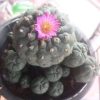
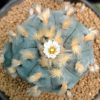
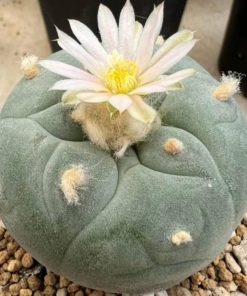
lophophora williamsii Solitaria is the true solitary peyote.
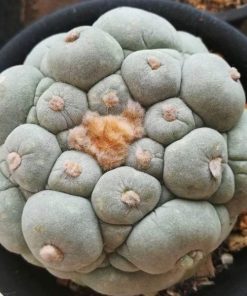
Our plants are the hardy northern form from Texas and Northeast Mexico. They stay as one clean, spineless, greyish-green button and rarely pup unlike standard Williamsii which clusters.
We grow ours on their own roots in a gritty limestone mix. Slow-growing, drought tolerant, and self-pollinating. Mature size is around 5 inches across.
Sold strictly for ornamental and botanical collection. Check your local laws before ordering.
Lophophora Williamsii variety Solitaria – lophophora williamsii Solitaria
This is the solitary form.
No pups.
No clustering.
Just one slow, steady, spineless button.
You’re looking at lophophora williamsii Solitaria because you want the classic, single-stemmed peyote.
The one that grows alone.
The one that takes decades.
We don’t sell hype.
We sell the real, slow plant.
What you actually get
This is not a fast-growing novelty.
This is a lifetime commitment.
A Solitaria plant is defined by its habit: it rarely, if ever, produces offsets.
Its entire energy goes into that single, fleshy, grey-green stem.
It’s the form collectors seek for its pure, uncluttered aesthetic.
- Grows alone. By definition. One head, one root system.
- Spineless and smooth. The classic button shape, soft to the touch.
- Extremely slow. A seedling may take 10 to 30 years to flower in cultivation. Patience is not optional.
- Native habitat. Limestone soils of the Chihuahuan Desert. Texas and Mexico.
The honest care guide (no sugar-coating)
Forget what you know about other cacti.
This plant is a drought-adapted survivor.
Your job is to mimic its harsh, dry home.
Light: Bright, indirect light or partial shade.
Full, scorching sun can burn it.
Think under a desert shrub, not in an open field.
Soil: Non-negotiable. Gravelly, well-drained loam.
A standard cactus mix is often too rich.
Add extra grit (pumice or perlite) to ensure zero water retention.
Watering: The #1 killer is kindness.
Water sparingly.
Only when the soil is completely, utterly dry for weeks.
In winter, stop entirely. It’s dormant.
Overwatering = instant root rot.
Environment:
- Temperature: 18°C to 30°C (64°F to 86°F). No frost. Ever.
- Humidity: Low. Good air flow is essential to prevent fungal issues.
- Fertiliser: Rarely. A tiny dose of low-nitrogen cactus feed in spring is plenty.
Why choose the Solitaria variety?
Most lophophora williamsii you see are multi-headed clusters from pups.
The Solitaria is the pure, original form.
It’s what you find in old herbarium specimens and classic botanical illustrations.
For the serious collector, it’s the benchmark.
It represents a decades-long investment in a single, perfect form.
Legal reality check (read this)
This plant contains mescaline.
Its sale, possession, and cultivation are illegal in many countries, including the UK and most of Europe.
We sell these strictly as ornamental botanical specimens for experienced succulent collectors.
You are responsible for knowing your local laws.
Do not purchase if cultivation is prohibited where you live.
By buying, you confirm you understand this is a non-psychoactive, ornamental plant.
Common questions, straight answers
Is this plant legal to own in the UK?
Ornamental cultivation of live lophophora williamsii Solitaria is illegal in the UK under the Misuse of Drugs Act 1971. We sell for export to jurisdictions where it is legal as a non-controlled ornamental plant. You must verify your local laws.
How long until it flowers?
In optimal conditions, a seed may take 1.5 to 3 years to reach maturity and flower. More commonly, it takes 5 to 15 years. A mature, flowering-sized specimen you buy today is likely decades old.
What’s the biggest mistake new growers make?
Overwatering. By a mile. It’s a desert plant. Neglect it. Let it shrivel slightly between waterings. It’s better to be too dry than too wet.
Does this Solitaria have less mescaline than a multi-headed plant?
Alkaloid content varies per plant, age, and growing conditions. The solitary form is not inherently lower or higher. The primary factor is age and stress—older, more stressed plants generally have higher concentrations. But again, this is an ornamental plant.
Can I propagate it?
Propagation from seed is the standard method. Stem cuttings or division of pups is irrelevant for Solitaria as it rarely produces pups. Seed germination is reliable with fresh seeds, but growth remains painfully slow.
What pests should I watch for?
Spider mites and mealybugs are the main threats. Inspect regularly. Treat with isopropyl alcohol or insecticidal soap at first sign. Root rot from overwatering is a far greater risk than any pest.
Why is it so expensive?
You are paying for decades of dedicated care by a previous grower. A 5cm wide Solitaria is likely 15-30 years old. Its value is in its age and form, not its size.
FAQs
Is lophophora williamsii Solitaria legal in my country?
You must check your national and local legislation. In many Western countries, live plants are controlled substances. We sell exclusively as ornamental botanical specimens to regions where such sale is legal.
How fast does a Solitaria peyote grow?
Extremely slow. A seedling may take 10-30 years to reach a mature, flowering size in cultivation. Patience is the primary requirement of the grower.
What is the best soil mix for lophophora williamsii Solitaria?
A very gritty, fast-draining mix. Use a commercial cactus soil as a base and add 50% additional mineral grit like pumice or lava rock. The goal is for water to run through instantly.
How often should I water my solitary peyote?
Only when the soil is completely bone dry for several weeks. From spring to early autumn, a deep watering every 4-6 weeks is often sufficient. Cease watering entirely in autumn and winter during dormancy.
Why does my Solitaria plant look shrivelled?
This is often normal, especially in summer dormancy or if you are underwatering correctly. It’s storing water in its taproot. Water deeply when you do water, and it should plump up. Persistent shrivelling can indicate root rot from previous overwatering.
Can I get mescaline from this plant?
While Lophophora williamsii is a natural source of mescaline, we sell these plants strictly as ornamental cacti. Their psychoactive properties are not our focus, and their cultivation for such purposes is illegal in many jurisdictions.
What makes the Solitaria variety different?
Its defining characteristic is its solitary growth habit. It does not produce the lateral offsets (pups) that the typical lophophora williamsii often does, resulting in a single, classic “button” shape throughout its life.
We provide these plants for what they are: slow, ancient, beautiful succulents.
The rest is up to you.
And your local laws.
| quantity | 30, 50 |
|---|
Be the first to review “Lophophora Williamsii variety Solitaria”
Related products
Lophophora Fricii seeds
Lophophora Seeds
Lophophora Seeds

Lophophora Seeds
Lophophora Fricii seeds
Lophophora Fricii seeds
Lophophora Fricii seeds
Lophophora Diffusa seeds
Reviews
There are no reviews yet.